

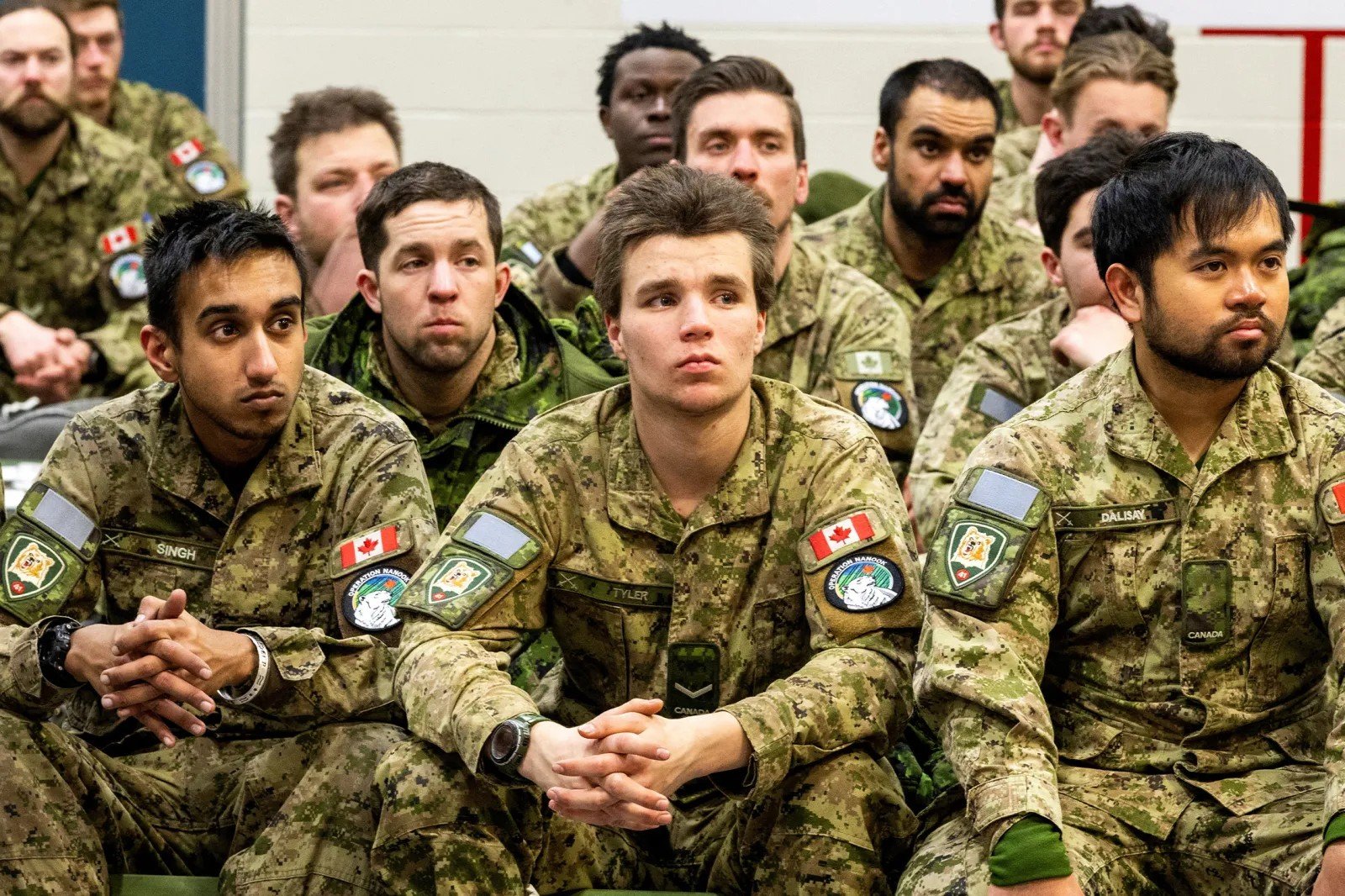
A new armed forces policy in Canada bans chaplains from praying or naming God in public.
While Defense Secretary Pete Hegseth seeks to give US military chaplains more freedom, the Canadian government is heading in the opposite direction as new directives ban chaplains from using religious language at public events.
This summer, the Canadian Armed Forces released a new policy banning military chaplains from praying or mentioning God at public events. The recently updated instructions direct chaplains to offer “inclusive” spiritual reflections that don’t have any religion-specific language. Christian leaders, military faith advisers, and conservative politicians across Canada decry the rule.
“The whole purpose of inviting a chaplain to pray at a parade, I think, speaks for itself,” said Terry Cherwick, who served as a chaplain for more than 30 years. “They hired me to come into the Canadian forces as a priest. So, if you wanted some just generic chaplain who’s just going to care for people and not really bring in the charisms that I bring to the table as a priest, then why have diverse chaplains?”
Released July 29, the instructions state that all members of the Canadian Armed Forces who make public remarks should “uphold the principle of state religious and spiritual neutrality” by not using words, actions, or symbols specific to their faith tradition. The rules tell chaplains not to pray at events, including change-of-command ceremonies, parades, mess dinners, commissioning of ships, and historical parades. If event organizers or attendees ask chaplains to pray, they must instead give what the new rules call “a spiritual reflection.”
“Spiritual reflections are intended to give freedom and space for members of all belief systems and philosophies to mark the occasion in a manner that resonates with them, such as a silent reflection, personal prayer, or respectful pause for others to do the same,” the instructions state.
While the instructions state their aim is to uphold the “value of diverse spiritual traditions,” Cherwick said they ultimately exclude and disrespect chaplains’ beliefs.
Critic argue that this new rule alienates people who have faith and believe in a the God of the Bible. They argue that removing prayers detracts from the long history and tradition of regimental or mealtime prayers.
The new instructions could violate conscience rights, according to Bishop Scott McCaig, of Canada. In August, McCaig published a statement criticizing the new policy. The instructions tell chaplains they must offer reflections that don’t make religious references but still foster “meaning, purpose, and spiritual well-being,” yet many chaplains can’t separate meaning, purpose, and spiritual well-being from God, McCaig wrote.
Derek Abma, a spokesman for Canada’s Department of National Defence, told WORLD in a statement that the instructions seek to be inclusive, not reject religion.
“The aim is for ceremonial moments to bring people together, regardless of belief,” he added. “By avoiding language specific to any one worldview, chaplains respect the dignity of all and help everyone present to engage with comfort, dignity, and a sense of belonging.”
This new ‘gag order’ stems from the 2015 Canadian Supreme Court decision in Mouvement laïque québécois v. Saguenay. There, the high court ruled that a municipal council meeting violated religious neutrality by reciting prayer before its meetings.
Abma noted that the new policy doesn’t limit a chaplain’s personal beliefs or ability to provide spiritual care at voluntary gatherings, such as worship services or theological discussions. Bending over backwards there, eh?
But others say the policy secularizes chaplains’ work. “I see it as kind of a secular gag order,” said Bruce Clemenger, president emeritus of the Evangelical Fellowship of Canada and a member of the Interfaith Committee for Canadian Military Chaplaincy.
“How can we come together as Canadians from diverse backgrounds when the beliefs of some are precluded from even being mentioned?”
The policy’s previous version, from 2023, required chaplains to acknowledge that military members have a diversity of beliefs before offering public prayers. But the new update eliminates specific religious language. “They can’t even mention God in their remarks,” Clemenger said. “But our national anthem includes reference to God.”
The new policy also expands its rules to apply to all members of the military who make public remarks, not just chaplains, Clemenger noted. He hopes that legal challenges, religious leaders’ pressure, and news coverage could lead to amending the instructions.
A military chaplain should recognize that the audience represents all kinds of beliefs or non-beliefs, acknowledged Maj. Gen. Douglas Carver, a retired chaplain for the U.S. Army who now leads chaplaincy for the North American Mission Board. But he said authorities shouldn’t condemn the chaplain for praying.
“Just because a chaplain stands up to pray at a ceremony, is that a religious service?” Carver asked. “You’re allowing people, or inviting people, to take a few moments to reflect on the Supreme Being, to reflect on God, your Lord, the source of your blessings.”
No regulations bar U.S. chaplains from praying or require them to give generic prayers, said Carver, who served in the U.S. military for 30 years after his denomination, the Southern Baptist Convention, endorsed him to serve as a Protestant pastor in all his work.
As it stands, the policy amounts to “putting their faith under a bushel,” he said. “What it does is neuter the language of God in the public square.”
Is Canada the new 1790 France?
****
“How then will they call on him in whom they have not believed? And how are they to believe in him of whom they have never heard? And how are they to hear without someone preaching?” (Romans 10:14).
