

How long must wounded members wait before church leadership acknowledges their pain, takes responsibility, and seeks reconciliation?
In the aftermath of the COVID-19 pandemic, many members of the Seventh-Day Adventist Church continue to carry deep wounds. For some, the consequences were devastating. Jobs were lost, families were divided, marriages were strained, and financial stability was shattered. Some report losing their homes or livelihoods. Others believe their deeply held religious convictions were disregarded and their religious liberty compromised.
These were not merely disagreements over public health policies. For many faithful Seventh-day Adventists, this became a crisis of conscience, religious liberty, and confidence in the spiritual leadership of the church they love.
During the pandemic, the Seventh-day Adventist Church publicly expressed support for COVID-19 vaccination while emphasizing the importance of public health and cooperation with civil authorities. In its official statements, the church also maintained that its understanding of religious liberty did not support using religious liberty objections to oppose government vaccination mandates.
For many members, these positions raised serious questions. How could a denomination historically known for defending liberty of conscience take a position that appeared, to them, to undermine the very principle it had championed for generations? What happens when a member’s sincerely held religious convictions conflict with government requirements, and the church’s public statements are perceived as strengthening the government’s position rather than defending the individual’s conscience?
Who speaks for the conscience of the individual when the institution takes a different position?
In the years that followed, concerned members sought answers. Some wrote letters, appealed to church administrators, requested conversations with General Conference leadership, and called for greater accountability. Others publicly protested, not necessarily because they wished to abandon the church, but because they desired to see it remain faithful to its historic commitment to religious liberty.
Yet many of these members say their concerns were dismissed, their appeals went unanswered, or their voices were not meaningfully heard.
Whether church leaders agree with every criticism is not the central question. The deeper issue is whether those who suffered have been given a genuine opportunity to be heard, whether the consequences of institutional decisions have been adequately examined, and whether leadership is willing to acknowledge mistakes where mistakes were made.
What will it take for General Conference leaders to sit down with these wounded members, seriously examine the concerns raised, acknowledge any errors in judgment, and pursue meaningful reconciliation?
Must another generation pass before such conversations take place?
Interestingly, a troubling historical pattern deserves our attention.
There are several documented occasions when Seventh-day Adventist leaders publicly acknowledged wrongdoing, expressed regret, or apologized for decisions made by church leadership.
Some of these acknowledgments came decades after the original events—including the two World Wars, racial segregation, and the 1994 Rwandan genocide.
An important distinction for your research: some were apologies issued by the General Conference, others came from national unions or local conferences. They should not all be presented as worldwide General Conference apologies.
1. World War I — Adventist leaders apologize for supporting military service and mistreating dissenters.
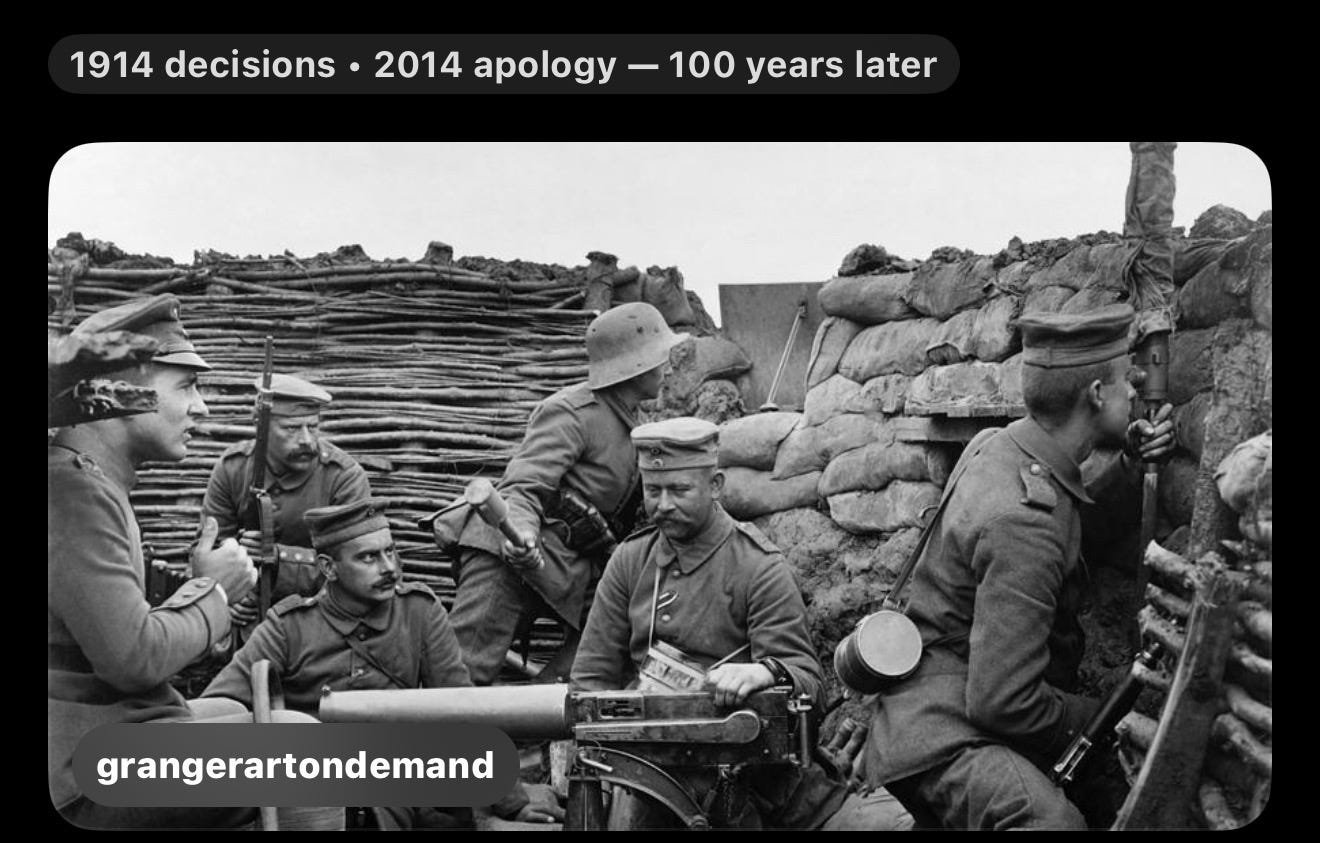
What happened: In August 1914, German Adventist leadership issued instructions encouraging Adventists drafted into military service to fulfill their military duties, including bearing arms and serving on the Sabbath.
Some Adventists resisted, arguing that these instructions contradicted their religious convictions. The resulting dispute contributed to the emergence of the Seventh-day Adventist Reform Movement in 1915.
The German Adventist Church later acknowledged that leaders had wrongly accused dissenting members of abandoning the truth and, in some instances, had people pursued by authorities.
The official acknowledgment — April 13, 2014
The German church leadership admitted:
"Advice contradicting the Word of God was given which led to division and profound hurt."
Its statement also acknowledged that former leadership had failed in its responsibilities toward congregations.
The signatories, Johannes Naether and Günther Machel, requested forgiveness from descendants, relatives, and the surviving Reform Movement organizations.
Historical significance: The 2014 statement was not the first reversal. German Adventist leaders had already withdrawn the disputed wartime statements in 1920 and expressed regret again in 1923.
2. World War II — German and Austrian Adventists apologize for conduct under Nazism
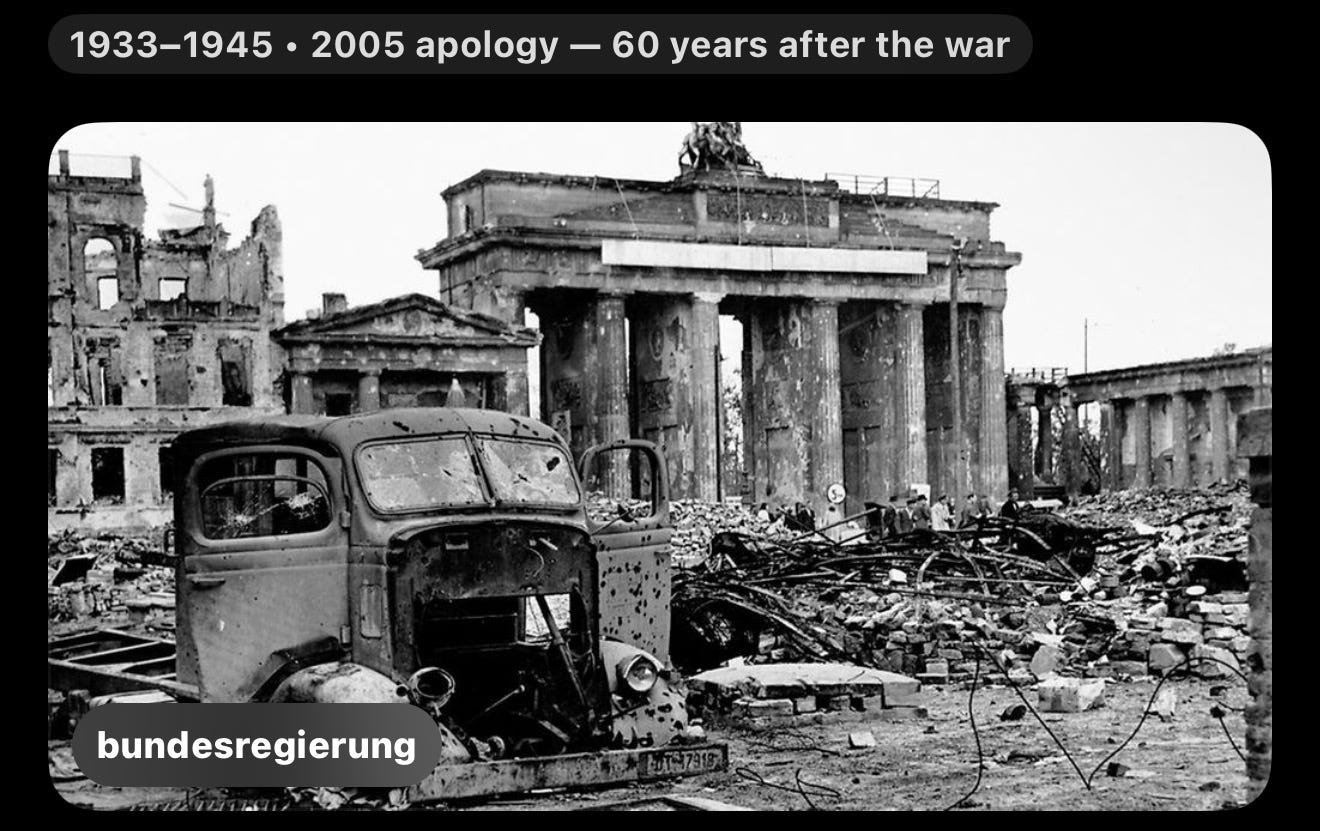
What happened: During Nazi rule, Adventist institutions and leaders in Germany and Austria faced pressure to accommodate the regime. Their subsequent declaration acknowledged failures relating to Nazi activities and the persecution of Jews and other victims.
The official apology — 2005
The Adventist Church's own news service reported that German and Austrian church leaders:
"deeply regret"
participation in or support of Nazi activities, and:
"honestly confess"
their failure to protect Jews and others from persecution and genocide.
The statement appeared in the May 2005 issue of AdventEcho and was reported by Adventist News Network on August 15, 2005.
Historical significance: This was a formal acknowledgment by the affected national church bodies, not a blanket admission that all Adventists supported Nazism. Some Adventists also resisted the regime.
3. Rwanda genocide — Adventist Church apologizes after the conviction of a former church president

What happened: During the 1994 genocide against the Tutsi in Rwanda, some Adventist members participated in violence against their neighbors and fellow believers.
A United Nations international tribunal convicted Elizaphan Ntakirutimana, a former regional Adventist church president, and his son Gérard, a physician, for their roles in atrocities connected to Mugonero and Bisesero.
The church's response — February 2003
Adventist spokesperson Ray Dabrowski acknowledged that some church members had turned against fellow members and neighbors.
The statement concluded: "We offer an apology."
Historical significance: This case involved more than a controversial administrative decision. It concerned grave crimes and the conduct of a former senior regional church official.
4. Racial segregation — Lake Union Conference apologizes to Black Adventist
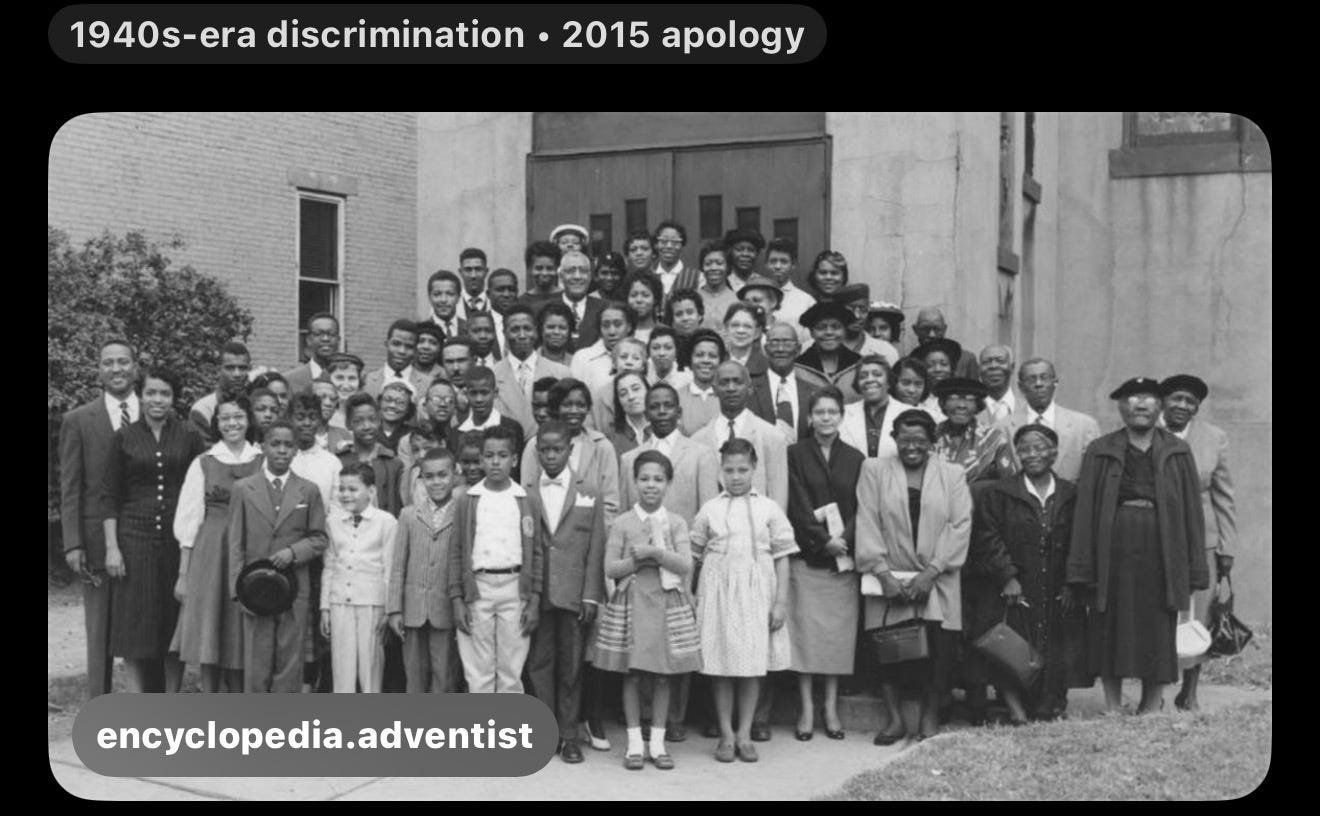
What happened: African American Adventists experienced discrimination within denominational institutions, including segregated dining facilities and exclusion from leadership opportunities.
Such injustices formed part of the historical context surrounding the establishment of regional conferences in the 1940s.
The official apology — June 20, 2015
Lake Union Conference President Don Livesay publicly apologized at the Lake Region Conference Camp Meeting before approximately 1,500 attendees.
Ten years later, reflecting on the apology, Livesay recalled: "It wasn't just about a statement that day"
He explained that generations had experienced discrimination without hearing an acknowledgment from leadership.
Historical significance: This apology addressed institutional racism within Adventism, rather than simply condemning racism in society.
5. General Conference — Worldwide acknowledgment and apology for racism and discrimination
What happened: Following renewed global attention to racial injustice, the General Conference Administrative Committee voted an official statement addressing racism, casteism, tribalism, and ethnocentrism.
Unlike the 2015 Lake Union apology, this was an acknowledgment adopted at the worldwide denominational leadership level.
The official statement — One Humanity
The General Conference acknowledged that members and church organizations had adopted discriminatory attitudes and practices that harmed others.
It stated: "We apologize where in the past we may not have spoken or acted boldly enough on these matters."
Historical significance: The General Conference recognized that discrimination had existed within church organizations themselves. However, the statement did not identify specific historical perpetrators or establish a comprehensive restitution program.
The Reality Of Adventist Apologies After The Fact: What Now?
When Institutional Conflicts Give Birth to New Movements
History also reveals another consequence of unresolved controversies within Seventh-day Adventism: the emergence of reform movements, independent denominations, and alternative administrative structures.
1. The Seventh Day Adventist Reform Movement (1914–1925)
The Reform Movement emerged from the controversy surrounding military service during World War I. Adventists who rejected the wartime position taken by certain European church leaders eventually organized separately. The movement established an international organization in Gotha, Germany, in 1925.
2. The True and Free Seventh-day Adventists (Early 20th Century)
Emerging in the Russian and Soviet context, this movement developed from conflicts involving military service, Sabbath observance, state interference, and religious freedom. It became associated with Vladimir Shelkov and maintained a separate identity from the officially recognized Adventist organization. Its history illustrates the tensions between religious conscience and government authority.
3. The Free Seventh-day Adventist Movement (Early 1900s)
This movement arose primarily in response to racial discrimination and segregation within American Adventism. Some Black Adventists organized independent congregations after experiencing exclusion and unequal treatment. The movement’s history includes the Berean Church of Free Seventh-day Adventists in Los Angeles, which separated from the denomination in 1916.
4. The Regional Conferences (1944–1945)
Following decades of racial discrimination, including the widely documented case of Lucy Byard in 1943, Black Adventists organized appeals for equal treatment and representation.
In April 1944, the General Conference authorized the establishment of Black-administered regional conferences. Lake Region, Northeastern, and Allegheny were among the first to emerge.
Unlike the other movements mentioned, regional conferences did not separate from the denomination. They became official administrative structures within the Seventh-day Adventist Church.
5. The United Sabbath-Day Adventists and Other Independent Black Adventist Initiatives
The ministry of John W. Manns and the later independent work associated with Lewis C. Sheafe and James K. Humphrey illustrate additional tensions surrounding racial equality, leadership authority, and organizational independence. These developments were not identical movements, but they demonstrate that demands for greater autonomy among Black Adventists predated the creation of regional conferences.
What Can We Learn?
These movements did not all arise for the same reasons, and their histories should not be treated as interchangeable. Nevertheless, they demonstrate that when serious concerns remain unresolved, members sometimes seek alternative forms of organization, fellowship, or ministry.
The lesson for today’s Seventh-day Adventist leadership is worth considering:
When the concerns of wounded members are left unresolved, the consequences may extend far beyond the original controversy. Distrust can deepen, relationships can fracture, and new divisions can emerge that persist for generations.
As the church reflects upon the COVID-19 controversy, it would be wise to examine these historical experiences—not to assume that another division is inevitable, but to recognize the importance of timely dialogue, accountability, and reconciliation.
History has a way of exposing what leadership sometimes refuses to acknowledge in the present.
These events were different in their circumstances and severity. Yet each reminds us that religious institutions, including our own, are not beyond making serious mistakes.
The question is not whether Seventh-day Adventist leaders can make mistakes. History has already answered that question. The question is whether they are willing to acknowledge those mistakes while the people who suffered are still alive to hear the apology.
Today, in the aftermath of COVID-19, many Seventh-day Adventists continue to wrestle with the consequences of decisions made during the pandemic. Some lost employment, experienced financial hardship, endured family conflict, or felt abandoned by the very institution they believed would defend their liberty of conscience.
Many of these members were not asking the church to reject medical science or dictate personal healthcare decisions. They were asking for something deeply rooted in our Protestant heritage: the right to follow their sincerely held convictions without religious coercion, and for their church to defend that principle consistently.
The General Conference’s public support for vaccination and its position concerning religious liberty objections to government mandates left many members questioning whether the church had adequately defended their individual rights of conscience.
Their concerns deserve more than silence. They deserve to be heard, seriously examined, and answered with transparency.
And where leadership made mistakes, those mistakes should be acknowledged.
We cannot preach repentance to Babylon while refusing to practice repentance in Jerusalem.
The Bible declares:
“Confess your faults one to another, and pray one for another, that ye may be healed” (James 5:16).
Notice that Scripture connects confession with healing. Genuine reconciliation cannot be built upon silence, institutional defensiveness, or the expectation that wounded members should simply move on. Nor should the church have to wait until another generation of leaders inherits these unresolved controversies before examining what went wrong.
An apology offered fifty years later may correct the historical record, but it cannot restore all the years lost to those who suffered.
I therefore appeal to the leadership of the General Conference and to Seventh-day Adventist administrators at every level: do not allow the unresolved wounds of the COVID-19 era to become another chapter in our history for which future leaders must apologize.
Open the doors for meaningful dialogue. Listen to those who have been wounded. Reexamine the church’s public statements and decisions. Investigate the consequences members have reported. Acknowledge errors where they are established. And where institutional actions contributed to injustice or unnecessary suffering, seek forgiveness and pursue appropriate reconciliation.
This is not a call for rebellion against the Seventh-day Adventist Church. It is a call for accountability, humility, healing, and biblical reformation.
Unity cannot be preserved merely by silencing disagreement. True unity must be grounded in truth, justice, love, and mutual respect.
If these concerns continue to go unaddressed, the resulting distrust may deepen, relationships may deteriorate, and further divisions may develop within the body of Christ.
That is not what we should desire for God’s remnant people.
May God grant us the humility to choose reconciliation before history forces another apology.
— James Desvallons
