


Ralph Waldo Emerson famously wrote “A foolish consistency is the hobgoblin of little minds.” Seventh-day Adventist Public Affairs and Religious Liberty (PARL) staff, and their fellow travelers, cannot be accused of having “little minds.” On the contrary, their minds are huge, none bigger, or so it would seem based on current events in the Church.
You may recall that during the last presidential election in the United States, candidates running under the banner of the Democrat party would routinely call their Republican opponents supporters of “Project 2025.” This attack was handled in the same way as calling the opposition, “Nazis” or “Fascists.” There was never any attempt to explain what was wrong with Project 2025; everyone should intuitively know what was rotten with that Project.
Using Project 2025 as an insidious slur was necessary because it is 920 pages long, and no candidate for public office was so resolutely literate as to read anything that long.
What caught my attention was when the clergy and other employees of the Seventh-day Adventist Church got into the act and started throwing “Project 2025” around as a forerunner of a national Sunday law. Since only one political party was being hammered as pro-Project 2025, those sitting in the pews could draw their own conclusions on how to vote to avoid the end of the world.
Imagine my surprise, then, when Adventist News Network recently started touting a Peruvian version of Project 2025 as a great advance for Adventists in Peru! Are we suddenly supporting the entering wedge for Sunday laws in South America and not North America? Is this a question that turns on the compass? Or are the PARL folk and their fellow travelers possessed of brains that are in fact painfully pressing against their skulls?
I vote for the big brain theory. But then I’m an optimist as my wife continually reminds me.
The recent story reported by Adventist News Network is found here. It lauds “Bill 4610, which proposes recognizing Saturday as a non-working day with compensatory time off for workers whose faith regards that day as a day of rest.” It had not passed at the time of publication, but ANN struck an optimistic tone.
Those who took the time to read the relevant section of Project 2025 (titled, “Mandate for Leadership: The Conservative Promise,” produced by the Heritage Foundation) would find that it proposed requiring employers to pay overtime to employees who were asked to work on Sunday or Saturday, the protected day depending on the religious belief of the employer. The idea was to discourage employers from requiring weekend work so that employees would have the opportunity to attend religious services on the weekend. Or maybe attend football games.
Reinforcing the suggestion that huge flabby brains are not consistent or logical brains, those shouting that Project 2025 was practically a Sunday law somehow forgot that the Adventist Church has long supported the religious accommodation provision of Title VII of the Civil Rights Act of 1964. That statute, used in countless cases to argue for the Sabbath-keeping needs of Adventists, poses more absolute restraints on employers. It requires employers to reasonably accommodate the religious worship needs of employees on pain of paying not simply overtime, but attorneys’ fees and, in extreme cases, punitive damages. Project 2025 proposed nothing about paying attorneys’ fees and punitive damages. Employers could continue to have their employees work on the weekend. Title VII provides for court orders barring employers from requiring weekend work.
Enter the rising Peruvian Project 2025, which appears, according to the ANN report, to mandate that employers release Adventists from work on their Sabbath. If this report is accurate, this is an absolute ban on employers requiring Adventists to work on the Sabbath. This is Project 2025 on steroids. The proposed Peruvian bill is much more aggressive in protecting a day of rest than either Title VII or Project 2025. This is no wimpy overtime payment. Unlike Title VII which only requires a “reasonable accommodation” and gives employers a pass on accommodating Sabbath observance if it causes an “undue hardship,” the Peruvian bill is an absolute ban on Sabbath work for Sabbatarians.
So far, I’ve not heard any screams from the PARL corner or adverse comments by Adventist clergy about an impending mandatory Sabbath worship law in South America. Could it be because the Peruvian bill is written in Spanish and they “no hablo español?” Or is it just a big brain problem?
Or perhaps hobgoblins?
****
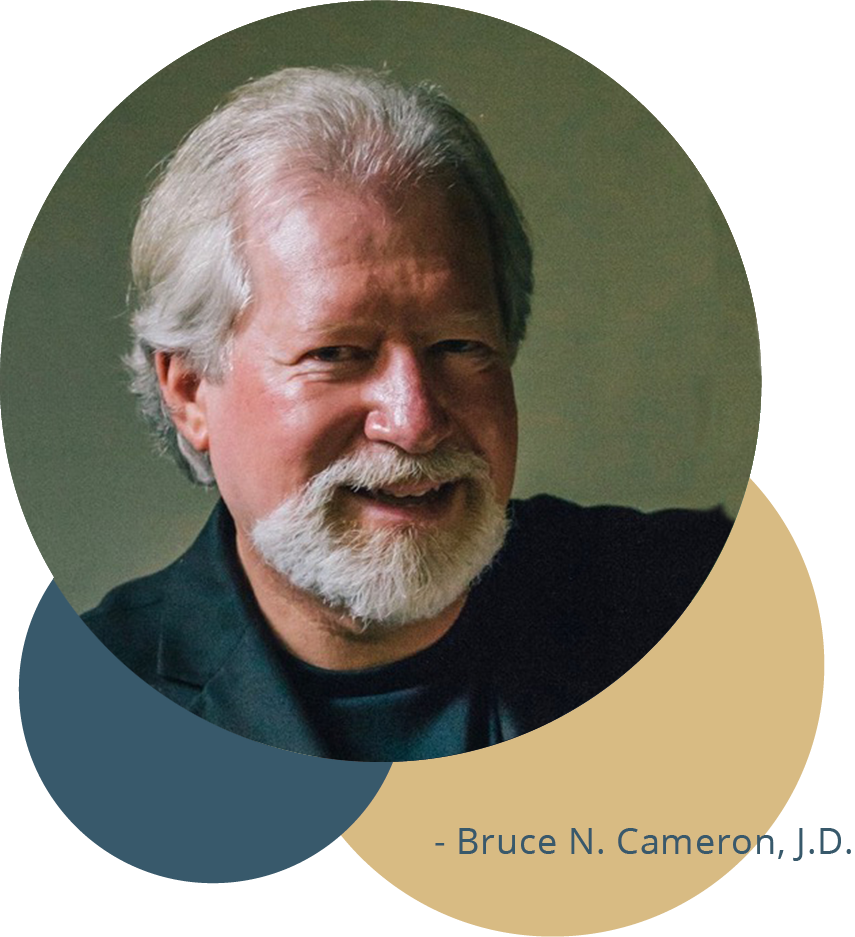
Bruce N. Cameron is the Reed Larson Professor of Labor Law at Regent University School of Law and is on staff with the National Right to Work Legal Defense Foundation. He is the co-author of a law school textbook on employment discrimination.
