


Imagine if the “right arm” of the Seventh-day Adventist Church, its medical work, was no longer exclusively guided by the Church, but instead by organized labor and the unelected “deep state.”
Further imagine that it was illegal for church administrators to speak with our “medical missionaries” about their employment conditions. Instead, the missionaries must direct their questions and concerns to a secular labor union which would exclusively discuss those concerns with church administrators. And any resolution of those questions and concerns must be “negotiated in good faith” with the labor union. If federal bureaucrats thought church administrators were not negotiating “in good faith” to resolve differences, the ministry could be penalized.
“What kinds of questions and concerns,” you ask? One area for dispute resolution is decisions over Church provided health insurance. Such as what constitutes a family when deciding coverage? Whether transgender surgeries or abortions will be covered? Another area for dispute resolution is “working conditions.” Would the Church have to provide smoking rooms? Could meat be kept off the menu? Should any special conditions apply to work on Sabbath? Another area would be disputes impacting religious freedom matters in the workplace.
If you see major problems with our medical work being forced into joint decision-making with a labor union, these problems became real when Loma Linda medical doctors who were residents or fellows overwhelming voted to be represented by a labor union. An unelected federal agency, the National Labor Relations Board, ordered Loma Linda to bargain over these kinds of issues with a labor union. Loma Linda’s lawyers aggressively and skillfully fought to protect the religious autonomy of the institution. But they were losing until union bosses heard the hoofbeats of the coming Trump labor board. The union disclaimed its prior election win and fled.
Here is the story.
When doctors graduate from medical school, they must take a residency to become “board certified.” This is evidence of advanced knowledge and expertise. Following residency, a doctor will often seek to serve as a fellow to gain additional medical training. As is typical for hospitals connected with a medical school, Loma Linda University Health Education Consortium (“Loma Linda”) operates a graduate medical educational program for residents and fellows.
Loma Linda sponsors about 70 programs, run through over 60 affiliated institutions, to provide training for about 800 residents and fellows. Some of these 60 affiliates are Seventh-day Adventist healthcare institutions, but more are secular or affiliated with different religious denominations. The residents “rotate” through these affiliated institutions to receive experience in the different areas of medical practice.
The work is grueling for residents. The goal is to limit them to 80 hours of work per week. Their shifts often last 12 hours. At the same time the pay is low. Litigation records show a salary range of $41,000 to $64,000 a year. Scaled to a regular 40-hour work week, the annual salary would be cut in half. Consider that these residents have all graduated from medical school.
At the same time, Loma Linda faces difficulty in paying the residents and fellows for their education. Loma Linda is prohibited from billing any public or private insurance carrier for the medical services provided by the residents or fellows. While Loma Linda is in California, the state does not provide funding under Medi-Cal for resident or fellowship programs. Loma Linda is reimbursed by its affiliated institutions for the work of residents and fellows, but this is insufficient for Loma Linda operates at a loss of $13 to $25 million annually for its program for residents and fellows.
This is the perfect storm for union involvement. The residents and fellows work long hours for low wages. Loma Linda runs the program at a loss of millions of dollars a year. Loma Linda’s goal in this is to produce competent Seventh-day Adventist physicians – although its program is not limited to Seventh-day Adventists, or even those with any religious affiliation.
Enter the Union of American Physicians & Dentists, an affiliate of the American Federation of State, County, and Municipal Employees (AFSCME), which is in turn affiliated with the AFL-CIO. The union filed a petition with the federal government to represent the Loma Linda residents and fellows, and after a battle that reached the United States Court of Appeals, the government ordered an election.
Of the total of 805 eligible voters, 361 valid votes were in cast in support of the union and 144 valid votes were cast against the union. The government certified that the union won the election. These government conducted elections turn on whether a majority of the employees who voted support the union, rather than whether a majority of employees who could vote support the union.
After the Church lost the vote, it did not give up fighting this serious governmental intrusion into its medical outreach. One reason is that it was fighting to defend its religious teachings. Consider the following official statement of the Church in North America on the relationship of its members and its institutions to organized labor:
[F]or more than a century the Seventh-day Adventist Church has taught its members and instructed administrators of its Church institutions that the Holy Bible instructs that Christ is the Lord of life . . . and the ultimate authority. . . . Based on [these] biblical principles . . . the Church hereby confirms its long-standing teaching that Church members should, and institutions must, remain free and independent from [labor unions or similar organizations]. Working Policy of the North American Division of the General Conference of Seventh-day Adventists (1996-97 Edition).
Ellen White wrote, in 1902,
“Those who claim to be the children of God are in no case to bind up with the labor unions that are formed or that shall be formed. This the Lord forbids.” 7 Manuscript Releases 52, 54 (1990).
The problem is not merely the abstract point about associating with labor unions. The trouble is that Loma Linda would have to negotiate in good faith with a union, under government supervision, the working conditions of its residents and fellows. Consider the following areas of known conflict:
1. The Church teaches that marriage is a lifelong union between a man and a woman. Any sexual activity outside of heterosexual marriage is sin.
2. The union (AFSCME) believes that gender is determined by social and emotional considerations. The union’s president declared that its struggle for workers’ rights and LGBTQ rights are of equal consideration. One former union official reported that the union taught him “To fight like hell” for LGBTQ rights. “No isn’t an option when we fight for LGTBQ people.”
3. The Church considers abortion out of harmony with God’s plan.
4. The union has long supported abortion rights. It will “assist affiliates” to protect abortion rights in their collective bargaining agreements and health care plans.
5. The Church has long supported the Religious Freedom Restoration Act as part of its support for religious freedom generally.
6. The union opposes the Religious Freedom Restoration Act and cancelled its Women’s Conference that was to be held in Indianapolis when Indiana passed a Religious Freedom Restoration Act.
What most do not realize is that once a labor union wins an election and is certified as the exclusive bargaining representative for all employees in the bargaining unit, employees are no longer able to represent their own interests with their employer. Employers are not even allowed to try to work out workplace problems directly with the employee. Instead, all disputes and problems must be resolved through union interaction with the employer.
No doubt some readers smirked when in my opening paragraphs I referred to “medical missionaries” being barred from dealing directly with the Church. In fact, there were faithful Adventists who were sucked into union representation who chose Loma Linda because they wanted to use their medical education to serve God.
As mentioned above, lawyers for the Church worked diligently and skillfully to protect the religious autonomy of the Church and its medical work. Had the dispute continued, I believe they would have won. But victory had eluded them so far.
Enter Donald J. Trump. The Church won this critical religious liberty fight at this point in time for one reason and one reason only – the election of Donald Trump. The National Labor Relations Board had the fate of the Church in its hands at the end of last year. But when it was clear that President Trump had won the election, Republicans held the Senate, and the National Labor Relations Board would be governed by Trump appointees, the union fled. The union asked the Board to “withdraw the election petition” and to “revoke certification.” On February 20, 2025, the motion to terminate the union’s victory was granted. Loma Linda won.
I expect, based on comments on other articles, that many readers will pillory Loma Linda for having a residency program that includes both institutions and medical doctors who are not Adventists. In any legal question it is important to correctly state the issue. If Loma Linda had entered into an agreement that it would compromise its religious beliefs to accept government money, or run its medical program, then I would agree to fault Loma Linda.
But it did nothing of the sort. Loma Linda determined to run its “right arm of the message” the way it thought best. While among Adventists there are legitimate disputes about how we should evangelize the world, the state does not get to be a part of that debate. If Loma Linda thinks the best way to advance the medical missionary work is to associate with non-Adventist institutions and non-Adventist medical doctors, that is its decision to make. The state cannot penalize Loma Linda for that decision.
I firmly believe in using common sense to win cases. But those who think Loma Linda should have lost this battle because it includes non-Adventists in its program or otherwise fails to show a level of religiosity demanded by the critic, should show more courage. See Revelation 21:8. The Church gets to decide how it will advance the gospel. It should not modify its program to mollify the government.
That is one reason I agreed to represent two faithful Seventh-day Adventist medical doctors at Loma Linda, one a fellow and one a resident, against being forced to speak to their Church employer through a labor union. Their religious freedom should not depend on the government’s views on the relative religious practices of the Church.
****
A note to the reader. Except for quotations related to the Church, none of the facts in this article cite source documents. The source of the facts are publicly available judicial and administrative opinions in the Loma Linda case, and research on publicly available documents done by Regent Law students and me. If this litigation had gone further, the National Right to Work Legal Defense Foundation was committed to fund litigation to help Loma Linda doctors remain free from being forced to support the union.
****
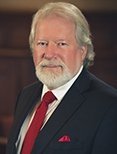
Bruce N. Cameron is the Reed Larson Professor of Labor Law at Regent University School of Law. He is on the litigation staff of the National Right to Work Legal Defense and Education Foundation.
