

“Hide it under a bushel? No!” shouted many of us children in a spirited singing of “This Little Light of Mine.” It was a childhood expression of Jesus’ injunction in Matthew 5:14-15 not to keep our light hidden.
A few verses later, our Lord followed with the teaching that those who obeyed and taught others to obey His commandments “will be called great in the kingdom of heaven” (Matthew 5:19).
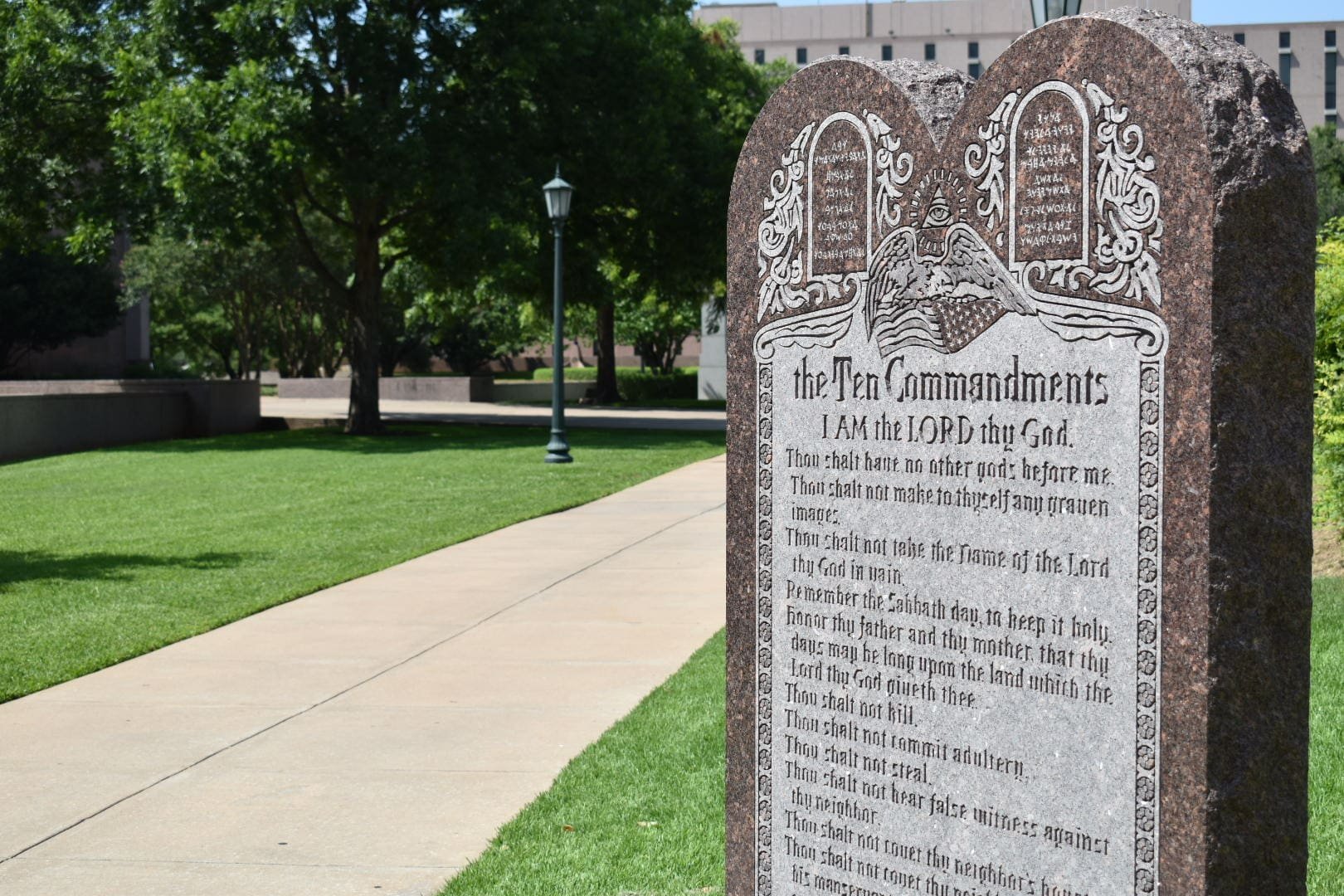
So why are so many Adventists looking for a bushel to hide the Ten Commandments out of the sight of impressionable young public-school students in Texas and Louisiana?
Right, “church-state separation.” Aspiring for constitutional rectitude somehow supersedes aspiration to be called great in heaven. Welcome to the three persistent ironies of my life!
The first is that some Seventh-day Adventist ministers insist that I agree that religious activity must be banished from the public square because they vigorously wave the talisman of “church-state separation.” The claimed authority for this talisman is the Establishment Clause of the First Amendment to the U.S. Constitution. For a long time now I’ve been paid to litigate the First Amendment and to teach its principles to aspiring lawyers. While experts sometimes run amok, I view clergy pressure on this point like me insisting to the airplane pilot that he misunderstands the nature of his job.
The second, related irony, is that it is the job of the minister to promote God to the population. If not for the Constitution, there would be no debate that promoting the commandments of God was part of his job. The minister is now arguing against his job being accomplished.
The third irony is that strident church-state separation advocates among the clergy would uniformly agree that the state has no business telling them how to do their job. Yet here the minister claims that state rules (the First Amendment) take priority over sharing God’s will among young people.
If you are skeptical of expert opinions, I am not going to ask you to accept my conclusion that promoting the Ten Commandments in the public schools is constitutional and should be favored by those aspiring to be called great in heaven.
What follows is an explanation of the First Amendment principles that sanction exposing the youth to the “transcript of God’s character.” E.G. White, Christ’s Object Lessons, p. 305.
Lemon Died, History and Understanding Lives: For decades, the “Lemon test”[1] limped along as the Supreme Court’s guide to which legislation violated the Establishment Clause of the First Amendment. It was about 35 years ago that the Supreme Court held one of my “Lemon” cases over to the next term on the theory that it was about to invalidate Lemon and thus might remand my case to the lower court for reconsideration. So much for a quick death.
The final stake in the failing heart of Lemon did not come until 2022 in the Kennedy case.[2] In place of Lemon the High Court created something called the History and Understandings test. This tests the legislation in question against “historical practices and understandings” to determine whether the Establishment Clause of the First Amendment has been violated. The idea being that if a statute is consistent with the understanding of the Founding Fathers at the time the First Amendment was established, then that statute is constitutional now.
Enter Nathan v. Alamo Heights Independent School District: On April 21, 2026, the U.S. Court of Appeals for the Fifth Circuit handed down a brilliant, en banc decision on Texas’ legislation mandating the display of the Ten Commandments in its public schools.[3] Of great importance is the Court’s explanation and application of the “historical practices and understandings test” (“H/U”). The initial question courts should now ask when following the H/U test is “whether a challenged law bears hallmarks of a founding-era establishment of religion.”[4] The First Amendment "must be interpreted by reference to historical practices and understandings," using an interpretation that "faithfully reflects the understanding of the Founding Fathers" and "focuses on original meaning and history."[5]
So, what would the Founding Fathers and the citizens of the time consider to be an establishment of religion? The Court endorsed several “hallmarks” identified by Professor Michael McConnell, the leading scholar in this area. These include:
(1) government control over religious doctrine, governance, and church personnel;
(2) compulsory church attendance;
(3) compelled financial support, especially in the form of land grants and religious taxes;
(4) prohibitions on worship in dissenting churches;
(5) use of church institutions for civil functions; and
(6) restriction of political participation to members of the established church.[6]
After considering these “hallmarks” of what the people around the time of founding of our country would consider an establishment of religion, the Court decided that the Texas Ten Commandments law “looks nothing like a founding-era establishment.”[7]
The Texas statute imposes no penalty or sanction regarding the religious beliefs of the students or their parents. While displays of the Ten Commandment are paid for by tax dollars, no individual is compelled to pay for the display. If the use of tax dollars creates a problem in your mind (likely based on Lemon thinking), that is nothing like the historic religious establishments which “relied on forced extraction of religious taxes to support churches and clergy.”[8]
Although it is true that students are compelled to attend school, and thus might look at the Ten Commandments display, this is “worlds apart” from founding era establishments which forced people to attend church. The mere display of the Ten Commandments does not require any students to recite them as an act of worship or affirm them. Students are not even required to look at them!
The Court cited McConnell for the proposition that “no one ‘ever claimed at the founding that the display of religious symbols was a form of religious establishment.’"[9] Today, “religious mottos, symbols, and flags adorn countless public buildings.”[10]
Consider God’s foundational principle for following His law:
“You shall not add to the word that I command you, nor take from it, that you may keep the commandments of the LORD your God that I command you”[11]
All those wailing about “slippery slopes,” need to consider that God rejects those who claim standing on a slippery slope is prohibited - when it comes to applying His law. Standing on a slippery slope might not be wise, but it is not wrong. God’s approach to His law makes sense for our approach to the law created by humans.
Having resolved the Establishment Clause argument in favor of giving God’s law a presence in the often-hostile public school environment, the court also rejected the plaintiffs’ denominational-discrimination argument. The plaintiffs argued that the statute adopted a “Protestant version” of the Ten Commandments, thereby preferring Protestants. The court rejected that argument, noting that courts are not competent to decide theological disputes about whether a particular rendering of the Ten Commandments is Protestant, Catholic, Jewish, or otherwise sectarian.
The Court noted that we have all sorts of religious names for our cities that might be argued to come from a certain religious perspective. Even the national motto, “In God We Trust,” arguably favors monotheists over polytheists.[12]
The Establishment defeating argument that I like best, explained by my friend, and one of the expert witnesses in the case, Professor Mark David Hall, was not addressed by the Court because it would place the Court in the position of passing on theological issues. Professor Hall’s argument is that, if you remove the numbers from the Ten Commandments (which is the case for the display endorsed by Texas), you eliminate most of any denominational tilt.
The court then separately rejected the plaintiffs’ Free Exercise claim, concluding that posting the Ten Commandments did not substantially burden religious exercise.[13]
The History and Understandings test moves our country into a more rational and historically accurate understanding of what separation of church and state means. From the point of view of those who believe in promoting God’s Word in a world that is hostile to it, this is great good news.
--------------
Bruce N. Cameron, J.D. Bruce is the Reed Larson Professor of Labor Law at Regent University School of Law and is on the litigation staff of the National Right to Work Legal Defense and Education Foundation. He has been litigating for 50 years and is beginning his 20th year of full-time teaching.
[1] Lemon v. Kurtzman, 403 U.S. 602 (1971).
[2] Kennedy v. Bremerton Sch. Dist., 597 U.S. 507 (2022).
[3] Nathan v. Alamo Heights Independent School District, 2026 U.S. App. LEXIS 11415 (5th Cir. Apr. 21, 2026) (en banc). En banc means that all judges in that circuit participated in the decision.
[4] Id. at *19.
[5] Id. at *28 (citations omitted).
[6] Id. at *41-42.
[7] Id. at 43.
[8] Id.
[9] Id. at 46.
[10] Id.
[11] Deuteronomy 4:2 ESV. This injunction is repeated elsewhere in the Bible.
[12] Id. at 49.
[13] Id. at 58.
