
World leaders just said out loud what Seventh-day Adventist General Conference administrators still will not: the United Nations is failing at the one task that justified its existence.
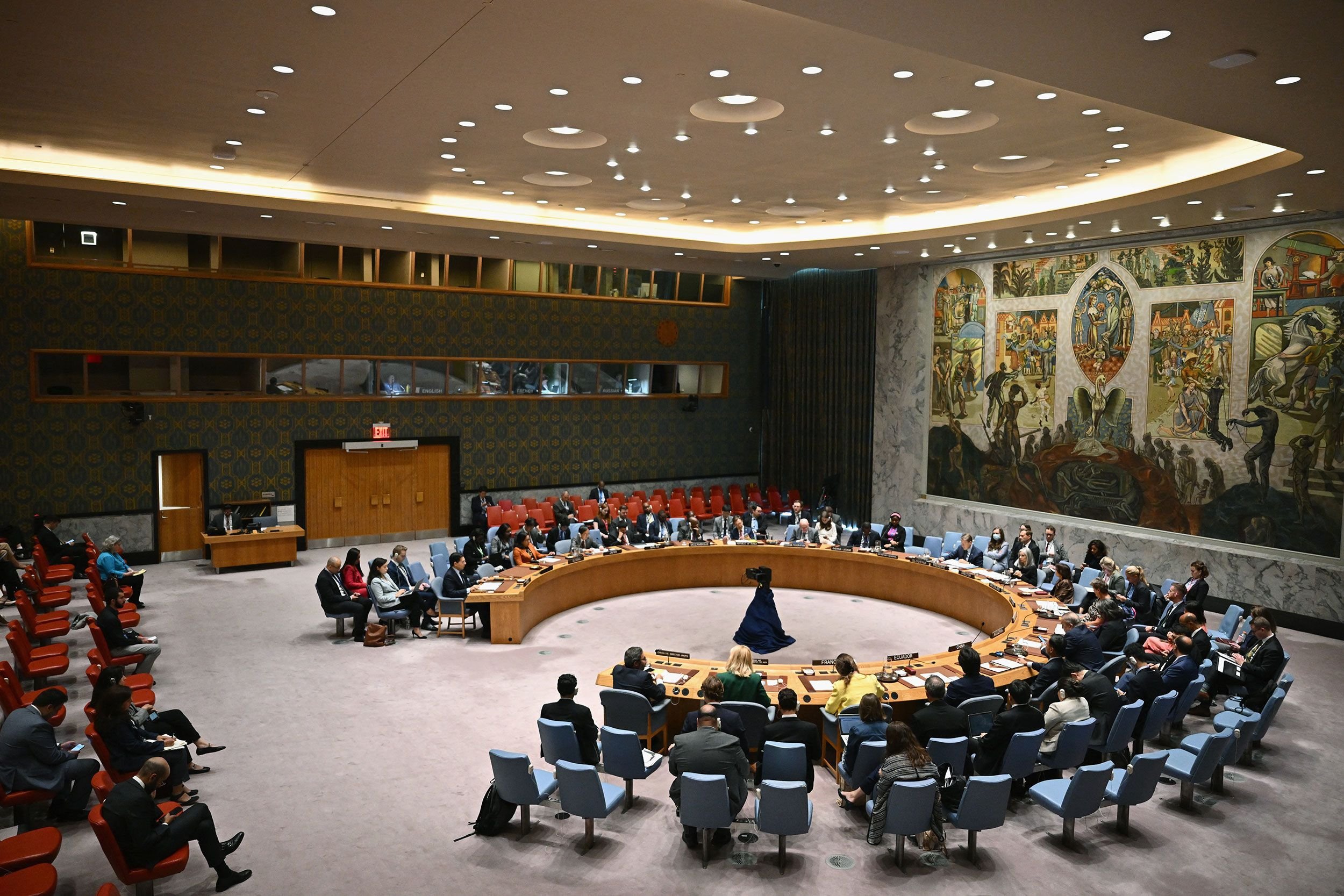
At the opening of the 81st General Assembly, Turkish President Tayyip Erdoğan told the hall that a system in which the will of more than 190 countries is subject to the whims of five “is neither fair nor capable of fully establishing trust.” The Security Council, he said, must be reformed because “the world is bigger than five.” He described the organization, founded eighty-one years ago to maintain international peace and security, as having been rendered unable to fulfill that mission.
Brazilian President Luiz Inácio Lula da Silva was no softer. The concentration of veto power, he argued, has left the United Nations unable to address the highest number of armed conflicts since the Second World War. “We are all held hostage by the inaction of the Security Council failing to fulfill its role.” Its credibility, he added, has never been lower.
These are not Sabbath-school theorists. They are heads of government standing inside the institution and naming its central defect: any one of the permanent five—the United States, Russia, China, France, or the United Kingdom—can paralyze action, and the result is a body that issues statements while wars multiply. The Wall Street Journal’s account of the session recorded the same pattern among other large states outside the veto club, including India and Nigeria. The complaint is old. The candor this year was not.
Set that against the posture of the General Conference. Since 1985 the church has held special consultative status with the UN Economic and Social Council. Since 1997 its relief agency, ADRA, has held the higher general consultative status, with the right to seat representatives, speak in ECOSOC settings, and treat the United Nations as an operational partner. It also demonstrates in quadrennial reports that the church is aligned with the values and goals of the UN.
ADRA has taken United Nations money and commodities for years and says so in its own reports. Their 2016 report lists $32,045,660 in UN support. A 2015 meeting between the General Conference president and the secretary-general was presented as evidence that Adventist service “resonates” with UN objectives. ADRA’s own representatives have echoed UN Day themes about mutual need between the world body and its NGO partners.
On January 29, 2019, the Public Affairs and Religious Liberty department co-organized the Fifth Annual Symposium on the Role of Faith-Based Organizations in International Affairs at the UN Secretariat. The Adventist Review’s own account says the meeting focused on development funding, and that speakers emphasized the role churches can play “as the UN pursues its far-reaching development agenda, known as the 2030 Sustainable Development Goals.” Ganoune Diop, then PARL director and a founding organizer of the series, called those goals an effort to produce a “flourishing of human life,” and argued from Scripture and other religious texts that faith organizations “can and should be involved” in sustainable-development funding. That is not a private memo. It is the Seventh-day Adventist Church leaders inviting other religious bodies into a UN-framed agenda and blessing the frame. You can’t make this stuff up.
PARL did not merely hold consultative status with the UN. It co-sponsored a symposium whose stated horizon was the UN’s 2030 agenda, and it used that platform to tell other churches the agenda was compatible with social justice. That is an ideological alignment, documented by the church’s own press, not only by a critic.
None of that paperwork is a secret. It is also not a vote on the Security Council, and defenders are right to say so. What they rarely say is that consultative status is still an institutional investment. It buys access, legitimacy, and, in ADRA’s case, substantial program funding, on the understanding that the church will function as a cooperative humanitarian actor inside the UN system. Proselytizing is off the table in that work. Criticism of the architecture that keeps the Council gridlocked has been, in public, nearly as scarce. When the same body proves unable to restrain the conflicts that produce the refugees and famines the church claims to help relieve, the SDA institutional answer has been to reaffirm the partnership, not to reconsider the premise.
That is the blindness.
Erdoğan and Lula can be faulted for plenty in their own records. But, on this question they are clearer than the men who file the church’s ECOSOC reports. They locate the failure where it sits: in a veto that lets five states hold the rest of the membership hostage, and in a peace machinery that has not stopped the highest level of armed conflict since 1945. General Conference leaders, (and slavish loyalists) by contrast, keep describing the UN as a useful forum for Sabbath rights and disaster logistics.
Incredible, too, is what sits down the corridor from the hall where those presidents spoke. The United Nations Meditation Room, opened in 1952 and refitted under Dag Hammarskjöld in 1957, was deliberately stripped of every symbol a Christian would recognize. Hammarskjöld said so himself: people of many faiths would meet there, “and for that reason none of the symbols to which we are accustomed in our meditation could be used.” In their place stands a six-and-a-half-ton block of iron ore, lit by a single shaft of light, before an abstract mural—an altar to permanence, stillness, and an undefined spirit, not to the God of Scripture.
The Lucis Trust, founded in 1922 as the Lucifer Publishing Company by the theosophist (ie. satanist) Alice Bailey and later renamed, has long treated that room as a emblem of its own program: a non-dogmatic spirituality, a “light of the spirit” giving life to matter, a world goodwill that needs no Christ. A church that keeps accredited representatives at the same headquarters, celebrates the partnership, and files its ECOSOC reports as if the arrangement were ordinary charity has never had to explain why its leaders are more comfortable with this chapel than the presidents who, in the same building, at least named the political failure. The Meditation room is not a footnote. It is the institution’s spiritual confession: secular in form, spiritualist in substance, and unbiblical by design.
A church that once warned its members to shun earthly coalitions now maintains accredited representatives, celebrates UN Day through ADRA, and treats the resulting alliance as ordinary Christian stewardship. The presidents of nations speaking in New York this September did not need Ellen White to notice that the coalition is not delivering what it promised. They simply looked at the veto, counted the wars, and said the institution is failing.
Adventist administrators who still defend the relationship as if that verdict had not been delivered are not protecting a mission. They are protecting an unholy alignment.
****
“Wait for the LORD; be strong, and let your heart take courage; wait for the LORD!” (Psalm 27:14).
