

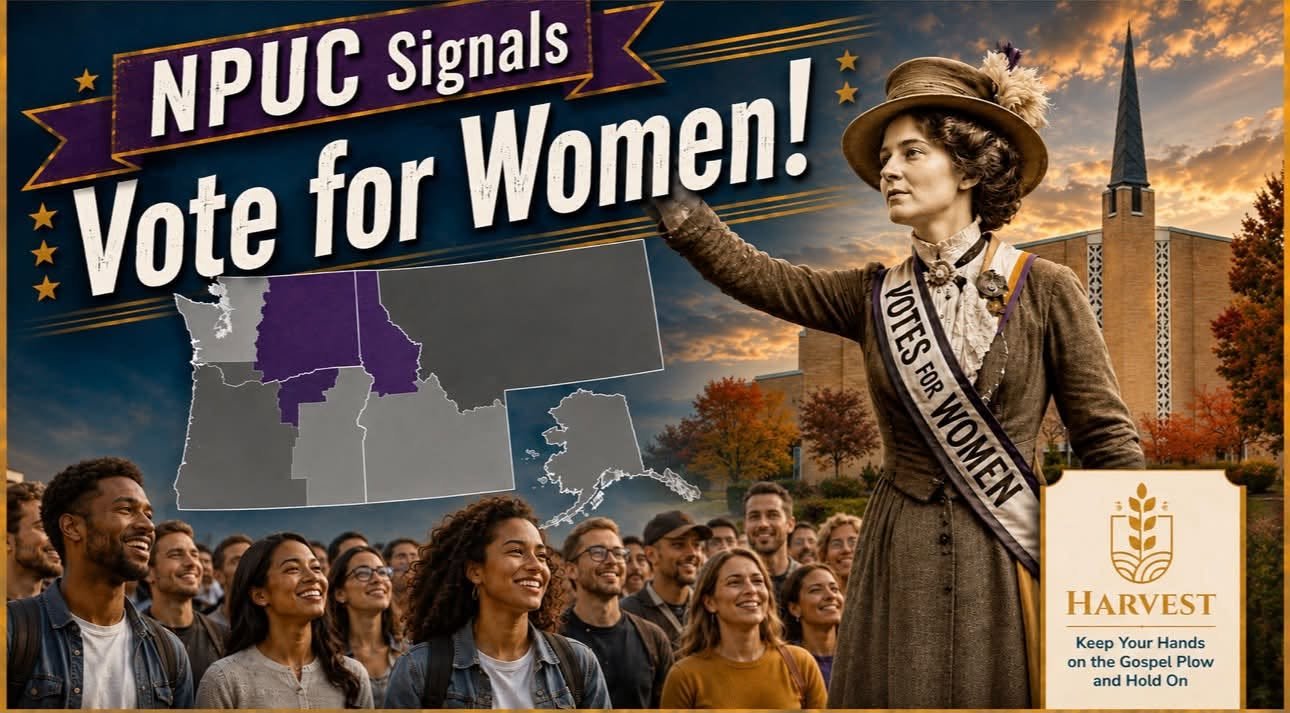
I am writing in response to the recent vote by delegates of the North Pacific Union Conference of Seventh-day Adventists (NPUC) to recognize the right and responsibility of each local conference to prepare and recommend names for ordination. I know that this issue may elicit strong opinions on both sides and, unfortunately, attract responses focused more on criticizing the church than engaging the substance of the discussion. And while I would genuinely like to respond graciously to everyone who feels compelled to comment on this opinion piece, time and other obligations simply will not permit me to respond to everyone individually. I appreciate your Christ-like engagement, whether you agree with my perspective or disagree with it.
To be honest, after reading several articles about the action, one rather unexpected image kept coming to mind: Glynis Johns portraying Mrs. Banks in Disney’s film, Mary Poppins, marching around the entryway of her home at 17 Cherry Tree Lane in London while enthusiastically singing “Sister Suffragette.”
The action taken by the NPUC delegates raises important questions for me regarding biblical order, historical precedent, world church authority, and, perhaps most importantly, our commitment to the decisions of the worldwide Seventh-day Adventist Church made during general conference. Having said that it is important to note the NPUC vote did not include language addressing women’s ordination. Instead, the verbiage states,
“The North Pacific Union Conference recognizes the right and responsibility of each local conference to prepare and recommend names for ordination and will consider all candidates recommended for ordination as submitted by the respective local conference Executive Committees.”
The language could be interpreted as an effort to clarify the General Conference (GC) Working Policy. This distinction is particularly important because the authority to recommend, the authority to approve, and the eligibility of a candidate are three separate questions under the GC policy. Conversely, some may view the language as a calculated maneuver intended to create a pathway for the ordination of women.
GC Working Policy L 45 05 states:
“After favorable consideration the local conference committee will submit the name of the candidate with its findings and convictions to the union for counsel and approval.”
Thus, the GC Working Policy establishes the worldwide framework governing pastoral ministry and the qualifications for ordination, while the union exercises delegated organizational authority to consider and approve individual ordinations.
Furthermore, GC Working Policy L 35, “Qualifications for Ordination to the Gospel Ministry,” states:
“The setting apart of men for the sacred work of the ministry should be regarded as one of the most vital concerns of the church.”
Consistent with this language, GC leadership stated publicly in 2017 that the Working Policy “only allows men to be ordained to the gospel ministry.”
Accordingly, any attempt to alter the process for recommending candidates should be carefully distinguished from changing either the eligibility requirements for ordination or the authority delegated to the union to approve an ordination.
This policy has already received extensive, careful, and prayerful consideration at the 2015 GC Session and should be upheld without reducing the 2015 vote to political or ideological debates or maneuvering. I believe the larger issue is how we understand church order, the authority of the worldwide body, and our responsibility to preserve the unity of the Seventh-day Adventist Church while remaining faithful to Scripture and our historic principles.
I personally affirm the action of the Seventh-day Adventist world church in GC Session regarding the ordination of pastors. In 2015, the delegates voted 1,381 to 977, with 5 abstentions, not to authorize divisions to make provision for the ordination of women to the role of pastor. This was a formal, definitive action voted by the world church while in GC session.
I also strongly affirm that the Holy Spirit distributes spiritual gifts according to His will, without regard to ethnicity, social class, or gender. Women are gifted, called, and indispensable to the mission of the church.
I believe, however, that we often conflate two distinct terms: ministry, which everyone is called to do, and Gospel ministry which pastors are called to. Ministry encompasses those who serve others on behalf of Christ and may include professional ministerial and clergy roles, but often includes the laity. Adventist teachers, for example, are classified as ministers of the church, and in many Conferences they carry ministerial cards. A Gospel minister, also known as a pastor, meaning “shepherd,” refers more specifically to one who has spiritual and pastoral responsibility for a congregation or group. Within the Seventh-day Adventist Church, ordination to the Gospel ministry is reserved for pastors, meaning they have special religious authority to proclaim the gospel, baptize, administer the Lord’s Supper, organize churches, perform marriage ceremonies, and provide pastoral leadership.
Therefore, my concern is not with the ministry, calling, or spiritual gifts of women. Rather, it concerns the ordination of women to the pastoral role of Gospel minister in opposition to a decision of the world church and what I understand to be the historical and biblical precedent governing that role.
There is also an important biblical distinction between spiritual gifts and pastoral office. In Scripture, the priesthood, which foreshadowed Christ’s office as our High Priest, was established through Aaron and his sons as a male office, set apart from the broader prophetic ministry through which God used both men and women. The New Testament's teaching concerning the priesthood of all believers does not erase the biblical distinctions of office and function.
Ellen G. White likewise described the husband and father as the priest of the home. She wrote that “the husband is the houseband of the family, the priest of his home,” and also described the father as “the priest of the family.” This does not diminish the spiritual authority, ministry, gifts, or influence of mothers or women in general. Rather, it reflects a biblical distinction of responsibility.
I am also increasingly concerned that secular cultural and political concerns are being imported into the church and are beginning to shape how we understand biblical roles, authority, and even church governance. I fear we are witnessing a growing fracture between what might be called “historical Adventism” and “progressive Adventism”—a division that increasingly resembles the polarization we are witnessing in politics around the world. When political and cultural identities and causes become more influential than Scripture, the Spirit of Prophecy, and our shared mission, the result is inevitably chaos because people begin to play by the rules they want to abide by.
Ellen G. White's counsel concerning the authority of the world church is therefore especially relevant. She wrote that “God has invested His church with special authority and power” and that the decisions of a General Conference composed of duly appointed representatives from around the world, when in session, should be respected. She warned that disregarding that authority is to “despise the voice of God” (Testimonies for the Church, vol. 9, pp. 260–261).
That does not mean every administrator, AdCom, or small committee speaks for God. Ellen White herself opposed that kind of authoritarianism. Her point was specifically the authority of the duly constituted representative body when assembled in GC session.
That is why I remain deeply concerned that Divisions, Unions, and local Conferences in North America, Europe, and Australia continue practices contrary to the expressed voted will of the world church. These actions only exacerbate the ongoing concern many members in the church have.
Additionally, the historical record concerning Ellen White must also be represented honestly. The official Ellen G. White Estate records show that she received ministerial credentials, but the 1885 credential has the word “ordained” crossed out. The White Estate also records that she was never ordained. I personally saw that document numerous times as a child, and again as a young father taking my own children to her home, Elmshaven, in California.
Therefore, the repeated assertion that Ellen White was “ordained” is not supported by the primary historical evidence. We should not rewrite Adventist history to justify a position today.
This is not an argument against women. After all, the Lord called a woman to be His end-time messenger, and she stood at many pulpits in North America, Europe and Australia preaching messages. This is an appeal for biblical integrity, historical honesty, organizational consistency, and respect for the decisions of the world church. I also believe that the Lord had very pointed messages for His end time church which were pertinent to seeing us through to the Second Advent. These were relayed to us through the inspired writings of Ellen White. She wrote on temperance, health reform, church organization, church community relations, abolition, becoming like Jesus, the end time events, and host of other issues, including the suffragette movement of her day. Yet the Lord was silent in regard to women’s ordination. I believe there is something we should reflect on in His silence on this matter.
If we believe in a worldwide Seventh-day Adventist Church, then the decisions of its worldwide representative body must mean something. We cannot appeal to Ellen White when convenient while disregarding her counsel concerning the authority of the duly constituted General Conference in session.
My concern ultimately goes beyond one vote or one issue. I am concerned that we remain a people united around Scripture, the Three Angels' Messages, the Spirit of Prophecy, and the mission entrusted to this movement, and not divide ourselves along the same ideological and political lines that are fragmenting societies around the globe.
The question deserves more than slogans or accusations. It deserves Scripture, primary historical documents, the actual counsel of Ellen G. White, and a willingness to honor the decisions of the worldwide church—even when those decisions are not what we personally preferred.
****
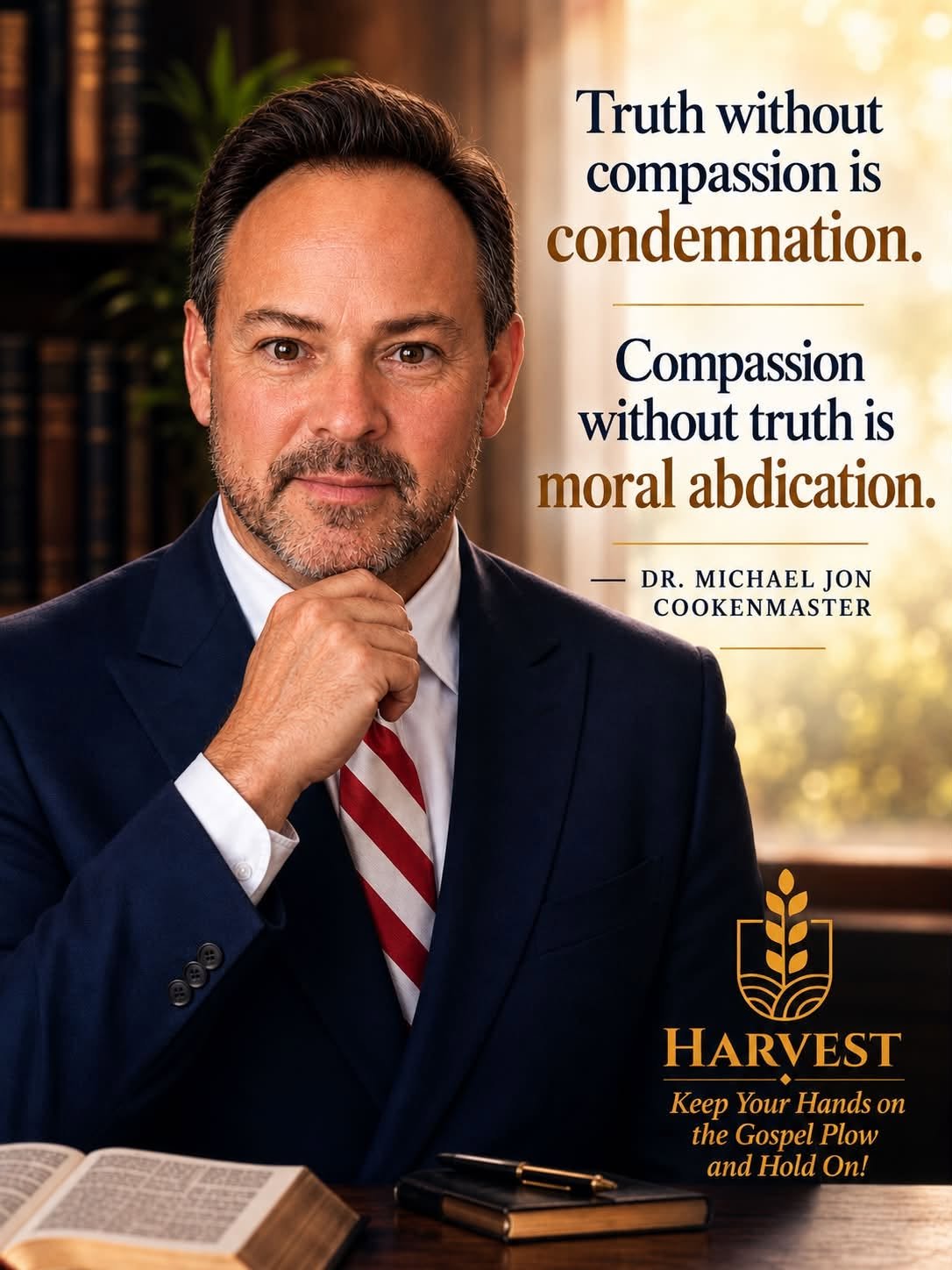
Michael Jon Cookenmaster is an accomplished educator, educational leader, consultant, and church educator whose career has spanned more than three decades. Born in Los Angeles, California, Michael spent his formative years in Arizona, where he attended Tucson Junior Academy before completing his secondary education at Thunderbird Adventist Academy. Michael pursued higher education at Loma Linda University, earning a bachelor’s degree in liberal arts with an emphasis in elementary education. He subsequently earned a Master of Arts in Curriculum and Instruction from La Sierra University. While attending La Sierra University, Michael was a founding member and original second tenor of the La Sierra Vocal Octet, directed by Dr. William Chunestudy.
