

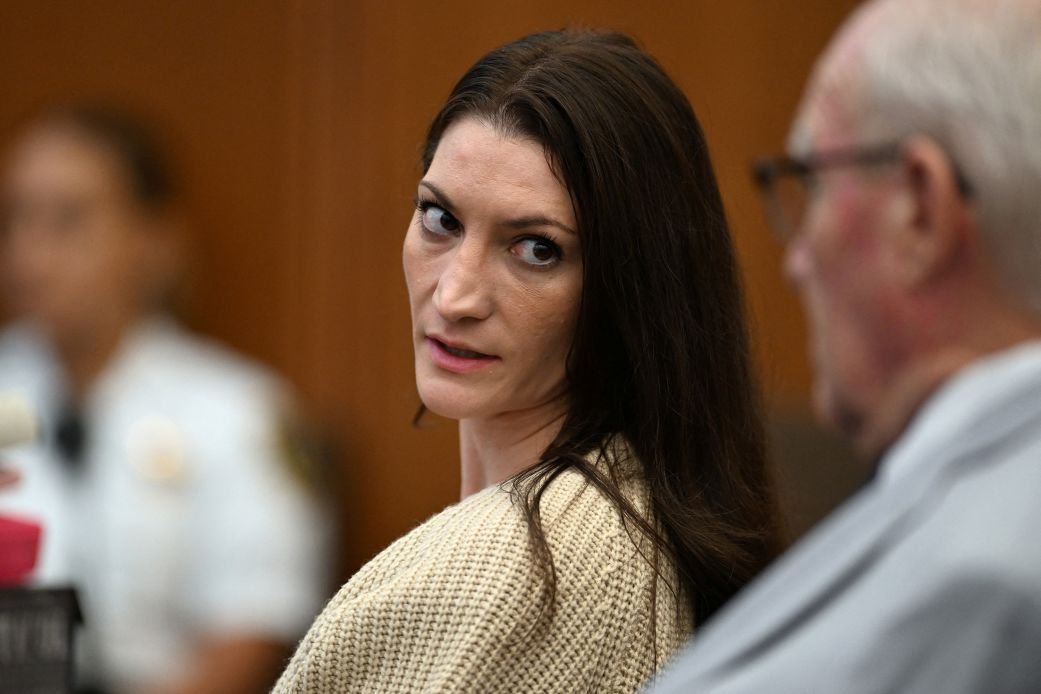
Martin Luther King Jr. said (in 1958) the measure of a man is not where he stands in comfort, but where he stands in controversy. That line has been running through my mind since the Lindsay Clancy mistrial.
A mother strangled her three little children. Five years old. Three years old. Eight months. She sent her husband out for takeout first. Then she used exercise bands. Then she tried to end her own life. That is the fact pattern. Nobody on that jury disputed that she did it.
What they disputed was whether she knew right from wrong when she did it.
Eleven jurors said she did not. One man said she did. The judge called a mistrial. And then the interviews started.
One of the women said the holdout “had the hardest time getting off the fact that Lindsay viciously killed her children.” Friend, that sentence ought to stop a Christian cold. Getting off the fact? The fact is three dead children. If a juror cannot “get off” that, he is doing the one thing the law actually asked him to do.
They called him arrogant. They said he disregarded the experts. They admitted they listened to nurse-jurors in the room about toxicology—something the judge had already told them they must not do. They talked about making things “better for other women,” about making sure she “gets the help she needs,” about sending a message. That is not a verdict. That is activism that wandered into a courtroom.
Laura Hollis, a woman who has practiced law for forty years, said out loud what a lot of people are only whispering: if large numbers of women cannot put their feelings on the shelf long enough to apply the law as written, we have a problem putting them in decision-making seats. That is not chauvinism. That is an observation from a woman who has seen this pattern before. She wrote:
“If a jury’s verdict is based not upon what the law is but upon ‘feelings,’ then the result in any given case will depend on who’s deciding the case and how you can make them ‘feel,’ not on the facts and what the law requires.
I now find myself wondering whether women are cut out for decision-making roles in the legal profession — serving as judges or on juries — because distressingly large numbers appear to be unable (or unwilling) to put their personal feelings aside and decide the case according to what the law is — not ‘to send a message,’ to ‘show compassion’ or ‘to make things better for all women.’”
Empathy is a glory in the home, and untethered from truth, it is a danger in a courtroom. Men sometimes fail the other way—hard, proud, or cold, but Scripture flatters neither sex. It does say God made them different on purpose. When the culture trains women to treat every hard case as a referendum on womanhood, you get what we just saw: eleven people who could not look at three small bodies and ask the only legal question on the table.
The holdout juror was later identified and doxxed. Old allegations. Media pile-on. That is a separate sin, and it is ugly. A juror’s job is not to be popular. His job is to stand on principle when eleven other people want him to sit down.
National polls say only about half the country thinks she is guilty of murder. A fund for her parents passed a million dollars. Women stood outside the courthouse in “Standing with Lindsay” buttons. Some posted videos holding their own living children and wrote “Same, Lindsay” across the screen. That is not compassion. That is a toxic confusion of victim and perpetrator so deep it ought to make the church weep.
Postpartum suffering is real. Psychosis is real. The law is also real. The question was not “Did she hurt?” The question was “Did she know?” Planning the husband’s absence, searching how long he would be gone, taking the children one by one—that is not the behavior of a person who has lost all moral awareness. You can feel sorry for a heinous woman and still refuse to call evil a medical footnote.
Common sense is not cruelty. Protecting children is not a war on mothers. And a jury is not a therapy group.
Toxic Empathy
As a Christian who has navigated the minefield of modern culture (as an observer) without losing my salvation (or my sense of humor), I can conclude that unchecked empathy is leading well-meaning Christians and Adventists straight into the arms of destructive ideologies.
Does it seem to you that the world is increasingly upside down, where wrong is right, hot is cold, darkness is light, and boys are girls, in the mixed-up Neverland of cultural confusion? Yes. Think NAD, for starters.
Those of us who stand on biblical principles are not out to kill kindness; we’re here to rescue it from the clutches of manipulation. Empathy, when untethered from truth, becomes "toxic"—a progressive tool used to bully Christians into supporting things that harm the very people they claim to help. Think of it as the spiritual equivalent of eating junk food: It feels satisfying in the moment, but it'll wreck you long-term.
From a Christian lens, this resonates deeply with passages like Ephesians 4:15, where we're called to speak "the truth in love." The world's version of compassion is often just emotional extortion dressed up in rainbow flags and protest signs.
Conclusion
Martin King was right about the measure of a man. The measure of a woman is the same measure. The prophet Micah was even more correct “He has shown you, O man, what is good; And what does the LORD require of you, But to do justly, To love mercy, And to walk humbly with your God?” —Micah 6:8.
Character shows when it costs you something—when the room is against you, when the cameras want a different story, when your feelings are loud and the law is quiet. One juror stood there. That is what character looks like.
“Learn to do good; seek justice, correct oppression; bring justice to the fatherless” (Isaiah 1:17).
****
