

Coloma has laid the groundwork. On August 23, 2026, it submitted a 248-page LGBTQ Accountability Action Request through the Church’s representative governance process (see screenshot below). The core material readers need to review is only ten pages: five contain the requested actions and five summarize the evidence, while the remaining materials preserve the extensive public record supporting the request.
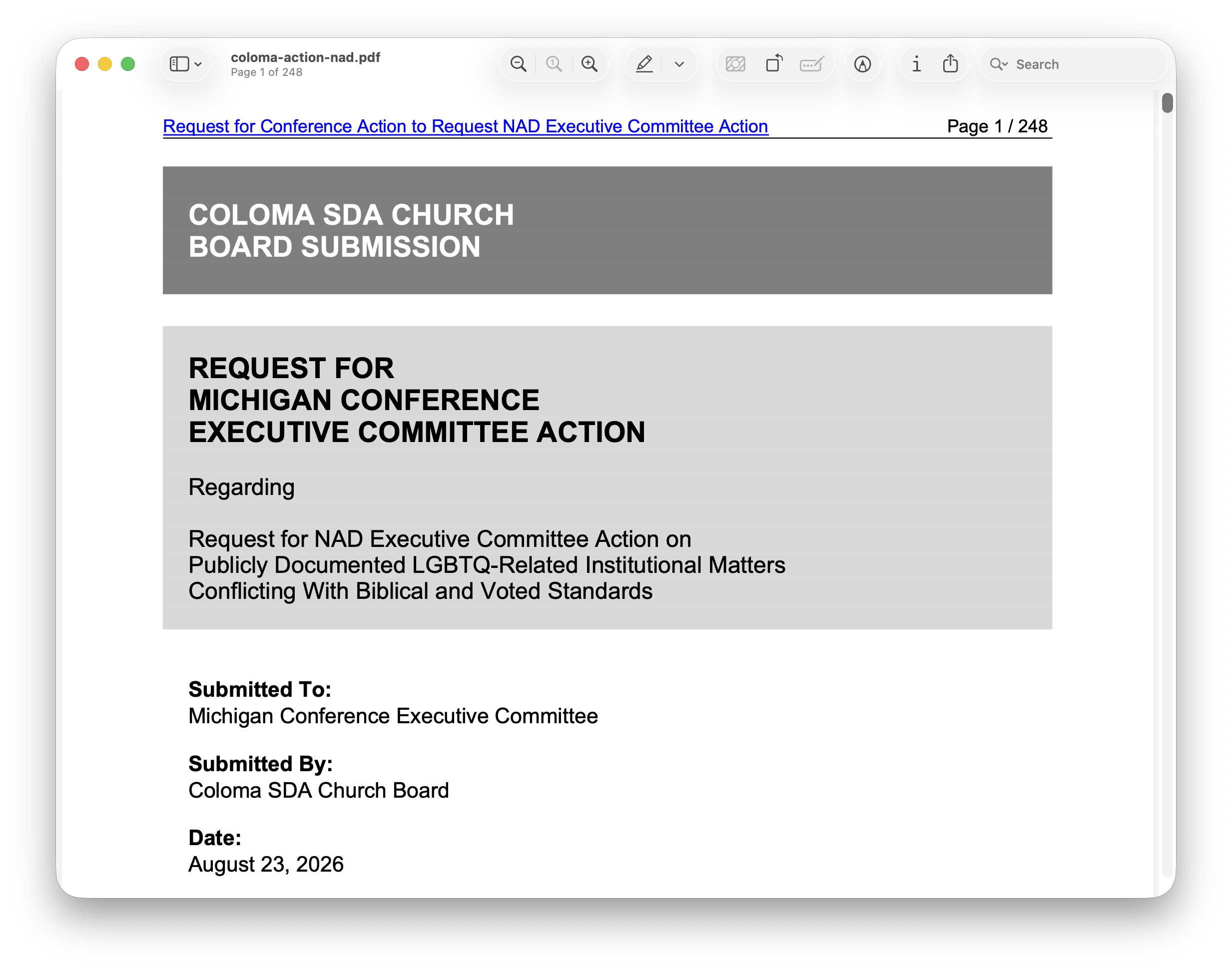
Beyond that, Coloma has provided a ready-to-use template, enabling local churches throughout the NAD to submit the same request by substituting their own church and conference names. A previous Fulcrum7 article explained why that matters. Readers can examine the filing and the 10-minute church submission template.
Adventist Today’s articles published September 16 and 18, 2026, have added urgency to the need for Conference and NAD responses. The central issue in Coloma’s request is institutional accountability for public LGBTQ-related actions by employees, pastors, or administrators acting in an official church capacity, and for official church platforms provided to LGBTQ-related initiatives, groups, or organizations in conflict with the Church’s biblical and voted standards. Adventist Today’s articles attempt, first, to minimize that accountability issue and, second, to reframe and deflect from it. Neither attempt succeeds. Here is why.
"Adventist Today" Attempts to Minimize the Issue (GayToday)
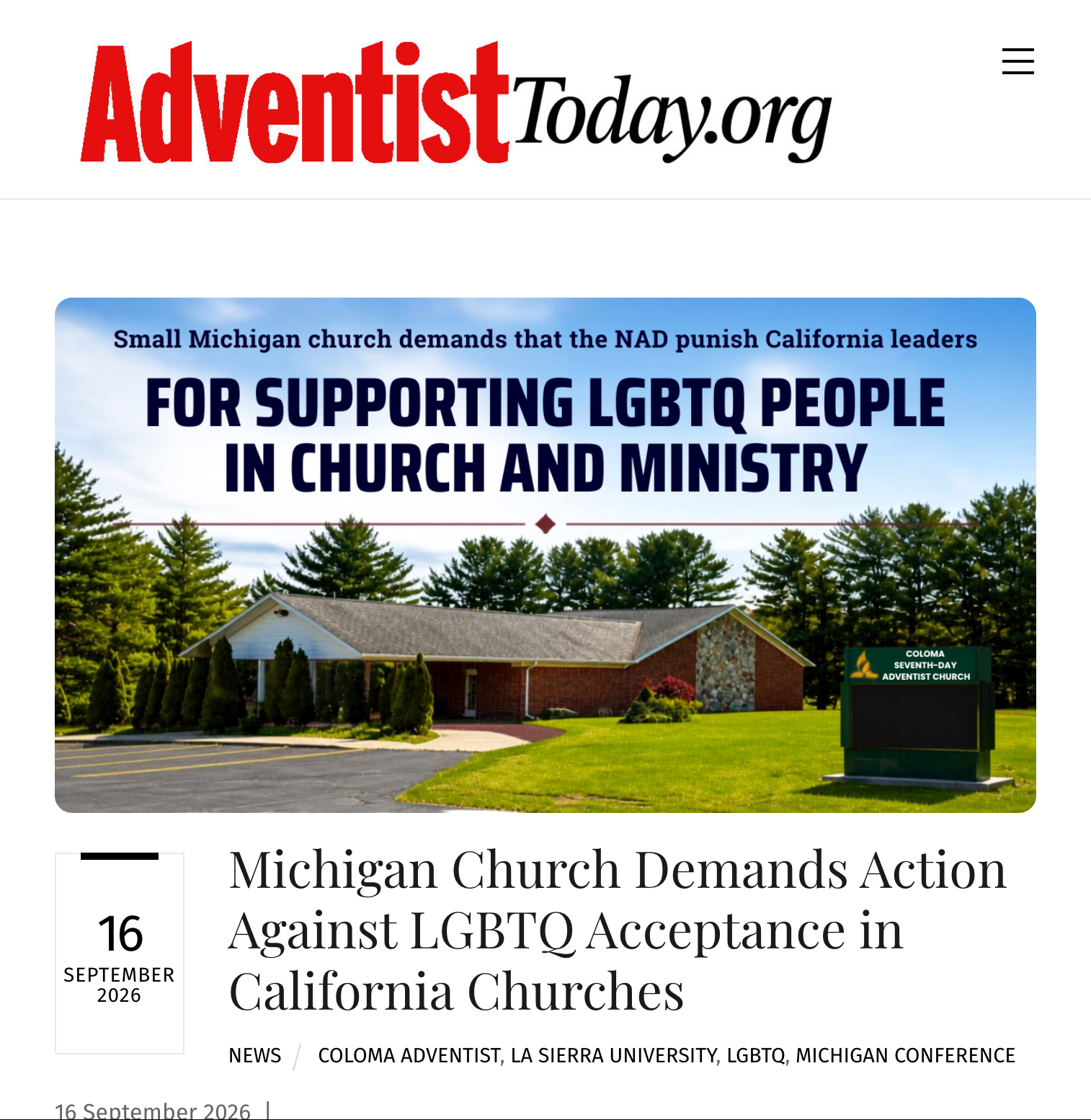
In its first article (see screenshot below), "Michigan Church Demands Action Against LGBTQ Acceptance in California Churches," Adventist Today gives prominent space to Leif Lind, whom it identifies as Glendale City SDA Church’s “now-retired married gay pastor,” and Floyd Pönitz, president of SDA Kinship, both longtime advocates for LGBTQ inclusion within Adventism. Lind says the document leaves him “disgusted” and “astounded” that people would spend so much time on “such trivial pursuits.” Pönitz characterizes Coloma as having a “fixation on what happens thousands of miles away” and contrasts it with what he calls the “gospel of love and welcome.”
Lind’s characterization warrants particular attention. Describing the documented concerns as “trivial pursuits” minimizes public actions by pastors or administrators in their official capacities, as well as institutional actions by conferences, universities, and congregations operating under the Seventh-day Adventist name. On the contrary, such matters bear directly on whether institutions operating under denominational authority remain accountable to the Church’s biblical and voted standards. Lind’s dismissal does not diminish Coloma’s case, rather it underscores why the accountability questions before church leadership require a clear and substantive answer.
Pönitz’s characterization of Coloma as having a “fixation on what happens thousands of miles away” overlooks two central realities. First, in the internet age, geographic distance has effectively collapsed: public institutional actions in one part of the Division can be seen, shared, discussed, and felt across the NAD almost instantly. Second, and more importantly, these practices involve institutions operating under the same denominational identity and subject to the same biblical and voted standards. Their significance, and the accountability questions they raise, therefore extend beyond their local setting.
Far from diminishing the issue, Adventist Today’s first article makes a substantive response more necessary. Coloma assembled an extensive public institutional record and placed it before the relevant governing bodies. By characterizing these concerns as “trivial pursuits” or a “fixation,” the responses from longtime LGBTQ advocates within Adventism reveal the depth of disagreement over how institutional conduct that conflicts with the Church’s biblical and voted standards should be regarded and addressed. Rather than diminishing the case for formal accountability, the views presented in this Adventist Today article strengthen it.
Adventist Today Attempts to Reframe the Issue
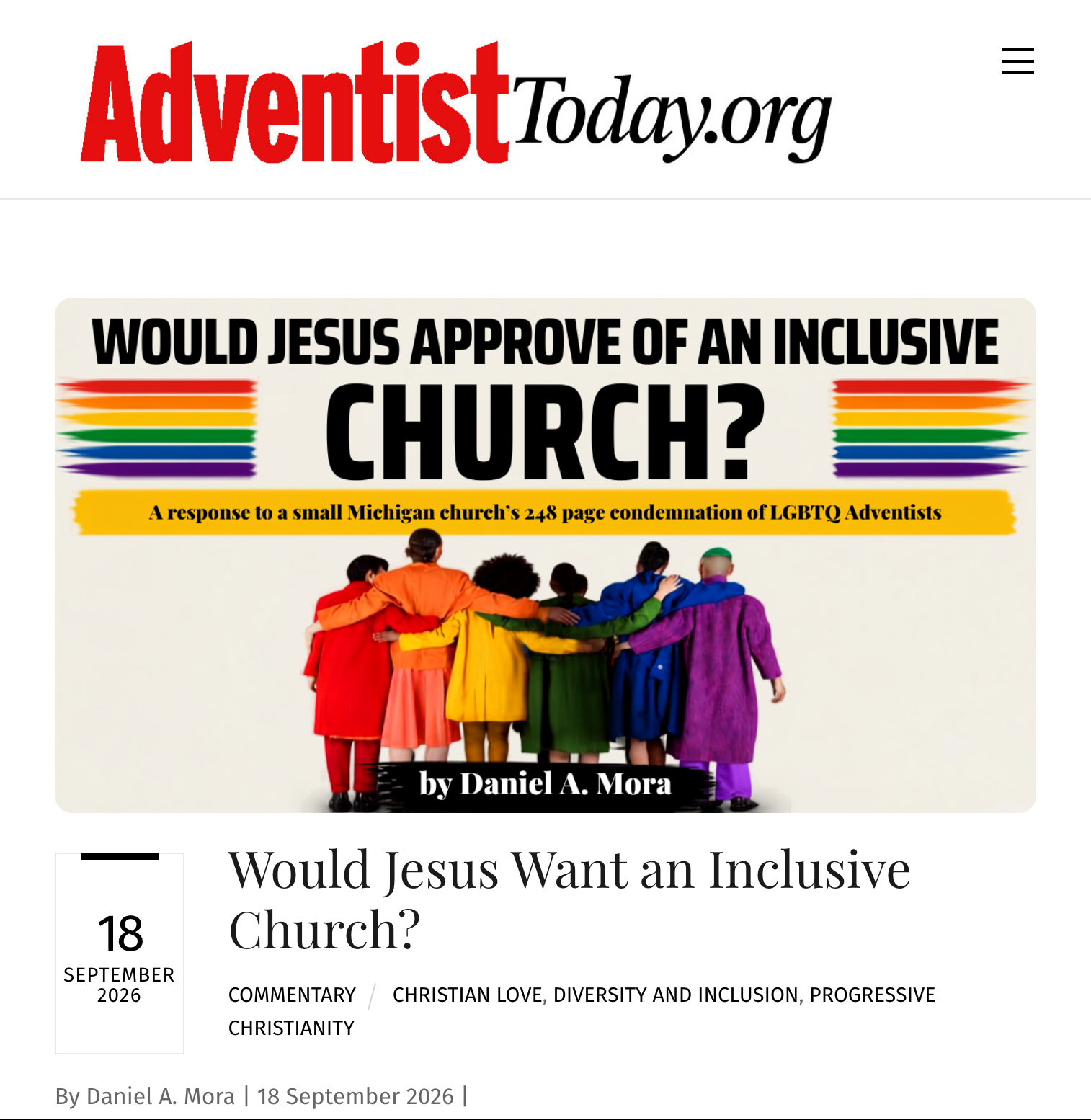
Two days later, Adventist Today added further urgency with its article "Would Jesus Want an Inclusive Church?" (see screenshot below). Daniel Mora attempts to recast Coloma’s action as seeking to prove that churches are “too welcoming,” characterizes it as “turning hospitality into evidence,” and closes by asking, “Who are we trying to keep out of Jesus’s embrace?”
But Mora’s framing does not address Coloma’s institutional accountability question. Coloma’s filing documents public institutional practices that conflict with the Church’s biblical and voted standards and asks what accountability should follow.
Mora’s appeals to hospitality and the treatment of individuals do not answer the institutional question: What happens when church employees, pastors, administrators, universities, or conferences engage in LGBTQ-related practices, or provide official church platforms for them, that conflict with the Church’s biblical and voted standards? Recasting institutional accountability as a question of welcome sidesteps the actual question rather than answering it. An appeal to welcome does not resolve accountability for those documented institutional practices.
Adventist Today’s second article therefore makes a substantive leadership response more urgent. Coloma requests that church leaders address specific public institutional conduct that conflicts with the Church’s biblical and voted standards, while Mora redirects the discussion to a different question. That reframing leaves the accountability issue unanswered and makes a substantive response to Coloma’s formal accountability action all the more necessary.
Now Conference and NAD Leaders Must Take a Stand
Coloma has assembled the evidence and submitted an action request through the Church’s representative governance structure. The matter now moves in two directions: upward to Conference Executive Committee members, Conference leaders, and NAD leaders who must address the accountability questions before them, and outward to local churches across the Division that can bring the same action request before their own Conferences.
Conference Executive Committee members and Conference leaders now face the question formally before them: Do the Church’s biblical and voted standards govern what is done institutionally within the Seventh-day Adventist Church, and will those entrusted with leadership act when documented institutional practices conflict with those standards?
Adventist Today’s pushback makes the need for action increasingly difficult to ignore. Conference Executive Committee members and denominational leaders must now acknowledge the documented conflicts with the Church’s biblical and voted standards and state plainly what they intend to do about them. The approaching fall 2026 Conference Executive Committee meetings and NAD Year-End Meeting, October 29 through November 3, make a clear response all the more necessary.
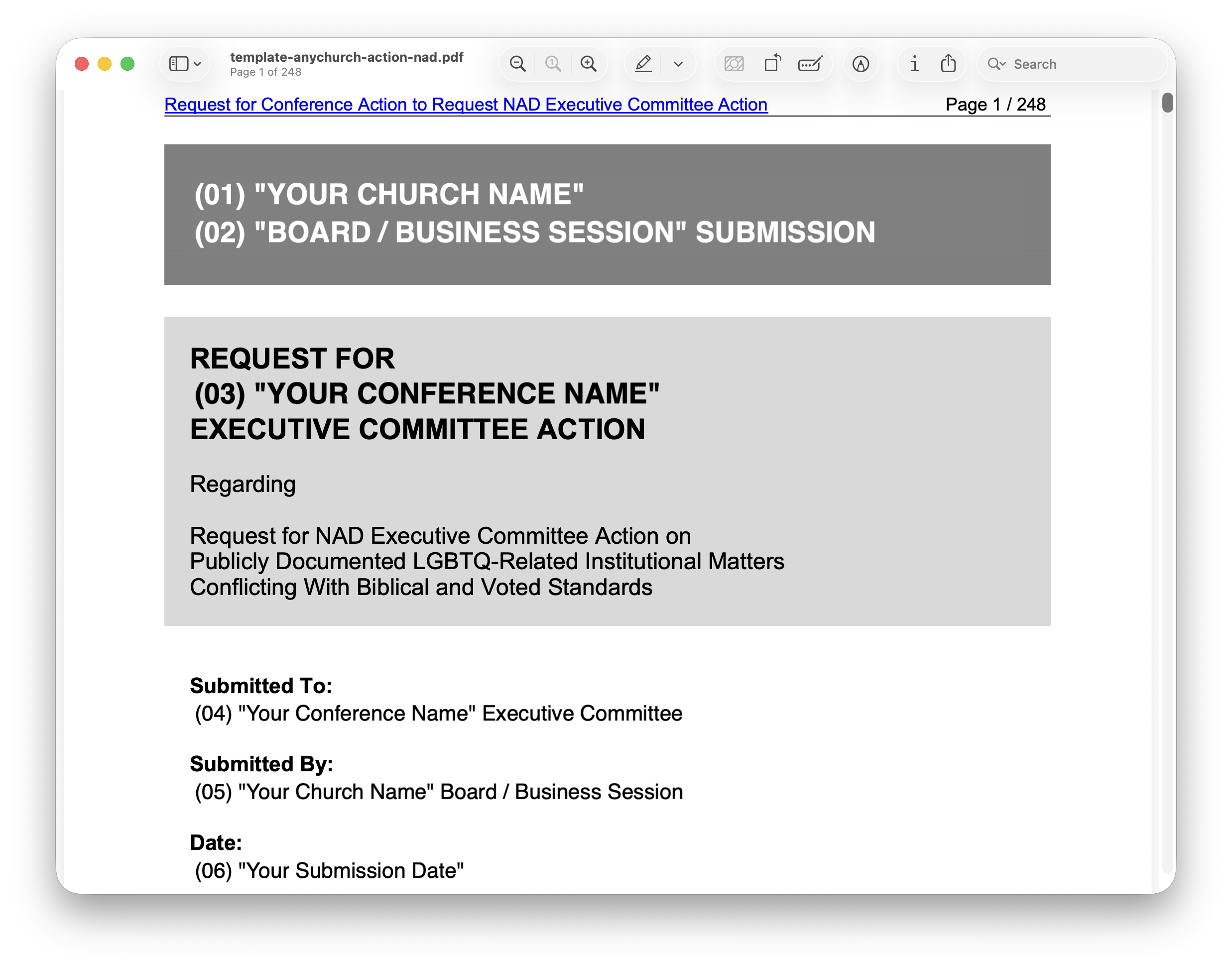
Other NAD congregations need not leave the matter to Coloma. Those who share these concerns can review the filing and use the ready-to-use 10-minute church submission template to adopt the same action request and place it before their own Conference Executive Committees (see screenshot below).
The question now confronts every local church board member, every Conference Executive Committee member, every Conference leader, and every NAD leader: Will you exercise the responsibility God has entrusted to you?
****
“Truth shall spring out of the earth, and righteousness shall look down from heaven” (Psalm 85:11).
