

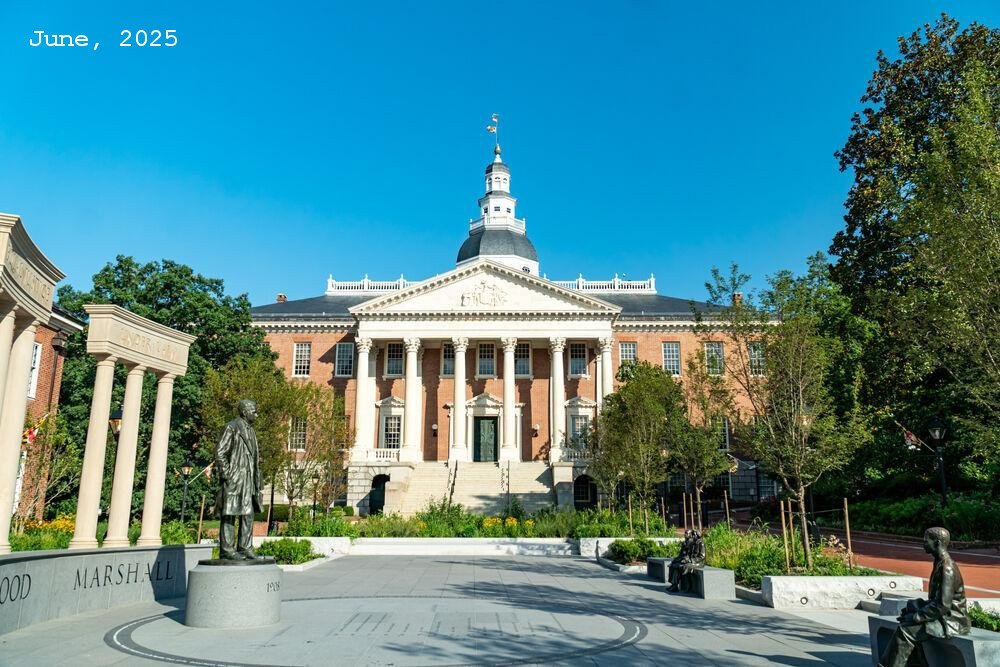
Last October we reported on a complaint by the SDA Church, filed Oct. 2 against the Maryland Civil Rights Commission and Attorney General Anthony Brown in U.S. District Court. The suit argues that the Maryland Supreme Court improperly narrowed the state’s Fair Employment Practices Act in a decision last year.
The Seventh-day Adventist Church has sued for the right to fire gay employees, arguing they have a First Amendment right to employ only members of the church in regular standing, and to fire those who don’t follow church doctrine.
This lawsuit, brought by the General Conference of Seventh-Day Adventists and Adventist Risk Management, Inc. against the State of Maryland will continue after a federal court decision on June 18, 2025, allowed several key constitutional claims to move forward. The ruling came after a hearing in which the church asked for a preliminary injunction to block Maryland’s interpretation of its Fair Employment Practices Act, while the state simultaneously moved to dismiss the case entirely.
The dispute centers on the Maryland Supreme Court’s interpretation of the law’s religious exemption, which limits the exemption to employees whose work directly furthers a religious organization’s “core mission.” Church leaders argue that this standard allows courts and government officials to intrude on internal church decisions about which roles are religiously important, potentially threatening the church’s autonomy and ability to manage its staff according to faith-based criteria.
In their lawsuit, the church and its insurer raised several constitutional objections—including alleged violations of church autonomy, free exercise of religion, and expressive association rights. The church argued that immediate court action was needed to prevent ongoing harm to their religious mission, while the state argued that the entire lawsuit should be dismissed at the outset.
Judge Theodore D. Chuang’s June 18, 2025 memorandum opinion denied the church’s request for a preliminary injunction, finding that the plaintiffs were unlikely to succeed on all their claims at this stage. However, he also declined to dismiss three central arguments, ruling that the claims regarding church autonomy, the Free Exercise Clause, and expressive association required further factual development and legal review.
This outcome leaves the case active and focused on core constitutional questions about whether Maryland’s law oversteps in defining which church employees count as religious. Both parties will now move into the next phases of litigation, with further opportunities to submit evidence and legal arguments.
General Conference of Seventh-Day Adventists v. Horton remains pending in the U.S. District Court for the District of Maryland. The timing of the next court proceedings has not yet been determined.
****
“If you are reproached for the name of Christ, blessed are you, for the Spirit of glory and of God rests upon you. On their part He is blasphemed, but on your part He is glorified” (1 Peter 4:14).
