

In the 19th century, Ellen White received divine guidance urging a return to a simple, natural diet centered on fruits, vegetables, whole grains, nuts, and legumes—a "Garden of Eden" ideal that minimized meat while promoting vibrant health.
Decades of gold-standard research, especially the landmark Adventist Health Studies (of which I am a participant), have proven the wisdom of this vision. This video sees it differently, however,
This video presents a strongly critical narrative, accusing the church of exerting disproportionate influence on U.S. dietary guidelines (especially the 1992 USDA Food Pyramid) through religious doctrines, historical figures like Ellen White and John Harvey Kellogg, and key appointments in nutrition organizations. The video frames this as a major factor in promoting high-carb, grain-heavy advice that allegedly contributed to public health issues like the rise in diabetes—calling it part of the "biggest health scam in U.S. history" and highlighting "disproportional influence" from a small religious group (SDA) on policy, research, and even food businesses. I beg to differ.
The truth is, vegetarians enjoy significantly lower risks of obesity, type 2 diabetes, heart disease, certain cancers, and overall mortality—often translating to years added to life. A thriving Adventist community in California stands as one of the world's rare Blue Zones, where people routinely reach 100+ in excellent health, thanks largely to healthy diet, active living, and strong community bonds.
The New 2026 Food Pyramid
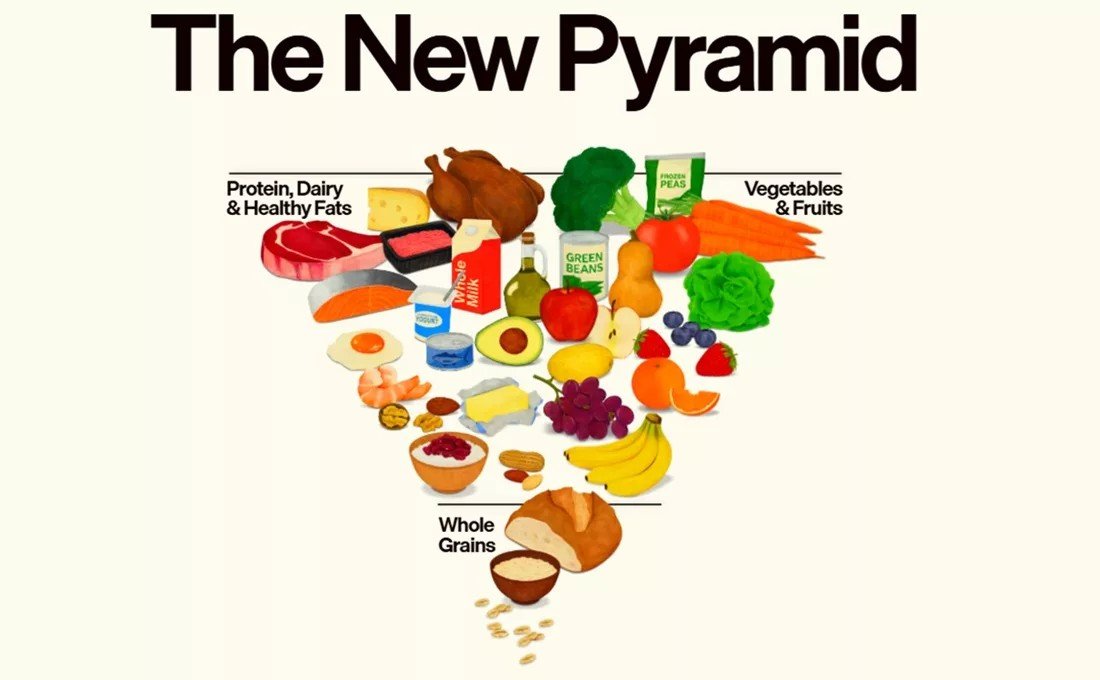
The 2025–2030 HHS guidelines bring back the 1992 pyramid but flip it upside down (inverted), with a strong focus on "real food," whole/nutrient-dense options, more protein, full-fat dairy, and healthy fats, while de-emphasizing grains and declaring a "war" on added sugars and highly processed foods. I agree that sugar is consumed in massive quantities today, to the detriment of our national health picture. I could do better on this front, too.
I disagree that full-fat dairy (e.g., cheese, whole milk; now recommending 3 servings/day), and red meats are a valuable part of a healthy diet. I disagree that saturated fats are useful for promoting health.
Bottom line, I have mixed reactions. Praise for reducing processed foods/sugars, but I am concerned over heavy animal products emphasis that conflict with heart health evidence.
Today, the Seventh-day Adventist commitment to plant-based nutrition stands as a proven evidence-backed model in an age of chronic disease epidemics. It’s not a guarantee, but it definitely makes an observable difference. The Adventist health message reminds us that prioritizing a plant-based diet isn't just healthy—it offers longer, more energetic lives filled with purpose and joy.
****
Discuss!
