

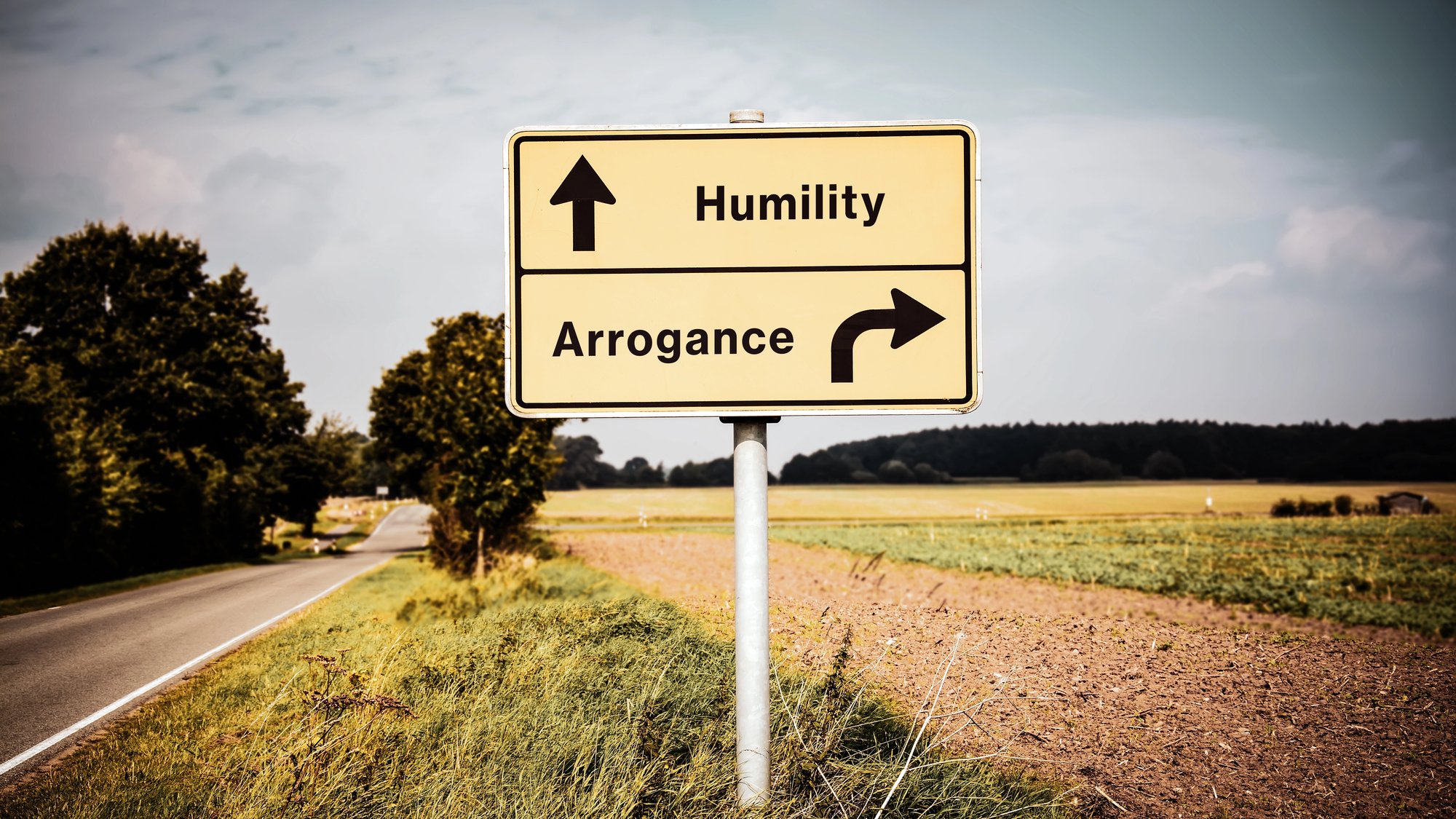
“I am rich, and have become wealthy, and have need of nothing.” Revelation 3:17
In Remnant, Inc. I wrestled with the irony of confidently proclaiming ourselves the Remnant Church while simultaneously identifying ourselves as Laodicea. The tension is worth carrying a little farther.
Laodicea’s problem was not simply wealth. It was perception. She looked at what she possessed and reached a conclusion about what she was. She had enough. More consequentially, she believed she was enough.
Christ’s assessment was considerably less flattering. There is something remarkably contemporary about that condition. Prosperity may have first taught us, I have enough. Modern culture has increasingly advanced the proposition to, I am enough. My experience is authoritative. My identity belongs to me. My emotional response is evidence of what is real. Right and wrong increasingly bend through circumstance, perspective, and personal experience.
And if I am fundamentally enough, then the problem cannot reside principally within me.
It must be somewhere else. Society. The institution. The school. The Church. The parishioner. The environment.
Something around the host must change. That creates an increasingly uncomfortable question for Christianity:
What happens to Christianity in a culture increasingly convinced that the self requires affirmation rather than transformation?
Christianity begins with a proposition our culture increasingly finds difficult to entertain.
Something about me needs to change. Not simply my circumstances. Not simply society. Not merely those who fail to understand or affirm me. Me.
Repentance presumes I can be wrong. Sanctification presumes I am unfinished. Discipleship presumes that discipline, correction, sacrifice, and growth are not assaults upon identity but necessary parts of becoming something we are not yet. Grace declares extraordinary human value. It does not declare human sufficiency. Somewhere along the way we began confusing the two.
We Raised Them in It
It is fashionable to complain about today’s youth. They are anxious. Easily offended. Distracted. Entitled. Emotionally fragile. Increasingly unable to sustain relationships, tolerate disagreement, or function comfortably in institutions that do not adapt to their individual expectations.
Perhaps. But they did not invent the culture in which they were raised. We raised them in it.
Parents, educators, churches, universities, institutions, media, entertainment, advertisers, and now social media all contributed. We taught children that their feelings matter. Their voice matters. Their experience matters. Their identity matters.
Previous generations certainly did not perfect emotional intelligence or healthy formation, and some correction was necessary. But value slowly became authority. Affirmation became obligation. Discomfort became suspect. Correction could be interpreted as invalidation. And eventually, when the individual struggled, our instinct increasingly became to ask what must change around them before asking what might need developing within them.
Then an interesting thing happened. W e recognized the resulting distress and responded by adapting further to the condition rather than seriously examining the assumptions that might be helping produce it. The cycle began feeding itself.
Education as Formation
Education may provide one of the clearest examples. Before discussing curriculum, standardized testing, college readiness, or academic achievement, perhaps we should decide what education is ultimately intended to produce. Societally, a successful educational culture should produce emotionally regulated, socially engaged, gainfully productive adults who can form stable relationships, carry responsibility, contribute more to the common good than they chronically extract from it, and function without requiring society to continually reorganize itself around their unmet personal needs.
Spiritually, our educational objective carries an even higher calling: restoring the image of our Maker (Ed 15–16). Arguably, the spiritual objective should complement the secular rather than stand in contrast to it. A person increasingly formed in the image of God should also become more disciplined, responsible, relational, productive, self-governing, and oriented toward service beyond self.
If that is the objective, academic proficiency alone is not enough. Credentialing is not formation. Yet we place remarkably different children into remarkably similar educational constructs. Sit. Listen. Read. Organize yourself around someone else’s sequence. Memorize. Demonstrate understanding through predetermined outputs. Repeat.
Many children perform quite well. Others do not. ADHD is real. Learning disabilities are real. Developmental differences, emotional disorders, trauma, and neurological conditions are real. But another question is considerably harder to ask. How much of what appears dysfunctional is inherent to the child, and how much may be intensified by an educational environment we designed and then declared normative?
Some children engage deeply through abstraction. Others reveal intelligence through spatial reasoning, relationship, physical interaction, construction, exploration, repair, observation, and tangible problem solving.
The child who appears incapable of sustained concentration during classroom instruction may spend hours building something, navigating the woods, repairing equipment, solving a physical problem, or mastering an activity that has meaning to him. That does not invalidate a diagnosis.
It should, however, complicate our definition of attention, intelligence, and successful formation.
This philosophy helped shape the Educational Ministry of Advent Mission Institute - AMI Forest School. Not because academic knowledge is somehow unimportant, but because the mind must be formed before everything we wish to pour into it can be meaningfully organized and used.
Education should form the child before merely measuring the student. Boys seem particularly vulnerable when that distinction is lost. A boy who repeatedly encounters school as the place where he is restless, behind, disorganized, disruptive, or deficient will eventually search somewhere else for competence.
The digital world is waiting. Video games provide purpose on demand. There are objectives, levels, visible progress, immediate feedback, risk, repeated attempts, achievement, and status. The boy who rarely wins at school can win there. The tragedy is not merely excessive screen time.
It is that artificial achievement can replace something older and considerably more durable: self-worth discovered through the fruits of his hands.
I built that. I repaired that. I grew that. I solved that problem. Someone needed me. Contribution provides evidence of usefulness that affirmation alone cannot manufacture.
Yet increasingly we measure success by how effectively institutions respond to the individual, rather than by how effectively they prepare the individual to respond to life. That inversion extends well beyond the classroom.
The Self-Fulfilling Institution
Parochial schools need enrollment. Public schools answer to parents, boards, voters, and communities. Universities require tuition, accreditation, regulatory compliance, grants, public funding, and increasingly complicated relationships with government and culture. Local churches need members.
Denominational organizations need participation, confidence, employees, institutions, and money.
None of those realities are inherently corrupting. Organizations must survive if they are to accomplish anything. But institutions tasked with forming people can slowly become dependent upon satisfying the people they were established to form.
And the surrounding culture does not enter primarily through obvious theological propositions.
That is what makes the shift so difficult to identify. A Christian university may still teach Scripture while adopting the same underlying assumptions about identity, emotional authority, affirmation, accommodation, and moral autonomy that dominate secular academia.
A local church may preach the Sabbath faithfully while becoming increasingly reluctant to confront conduct, repentance, discipline, responsibility, or moral boundaries because its members have been culturally conditioned to experience correction as rejection.
A denominational organization may continue proclaiming the Three Angels’ Messages while gradually evaluating social and institutional questions through the same moral philosophy becoming normative around it.
Nothing obvious has changed. The doctrines remain. The vocabulary remains. The signage remains. The Sabbath remains.
Yet the philosophy of the human person underneath them can shift almost unnoticed.
Apostasy does not always arrive by denying doctrine. Sometimes it arrives by retaining the doctrine while quietly adopting a different philosophy of the human person.
And because the issue is not immediately Sabbath, sanctuary, prophecy, or the state of the dead, the shift can pass beneath our theological radar. Society shapes the member. The member reshapes the institution. The institution accommodates the member. The adapted institution then further reinforces the culture that shaped the member. Eventually adaptation no longer feels like adaptation. It simply feels normal.
And once the host becomes convinced that it remains fundamentally sound, the explanation for its difficulties naturally moves outward. Declining enrollment requires greater relevance. Financial pressure requires another funding relationship. Cultural conflict requires accommodation. Young people disengaging requires adapting the institution to their expectations. Perhaps sometimes it does.
But Laodicea raises another possibility we seem increasingly reluctant to entertain: Could the problem be the host?
If I am fundamentally fine, then society must adapt to me. If the institution is fundamentally fine, then the environment must adapt to it. The modern translation of Laodicea becomes remarkably simple:
I am in need of nothing. Society is simply in need of adapting more to me.
And once an organization becomes convinced of that proposition, even criticism can become suspicious. The person calling for examination may be treated as a tare to be removed rather than a watchman sounding an alarm.
Spare Change
Perhaps this is where Laodicea becomes more than an ancient warning or convenient prophetic identifier.
Her defining problem was not simply wealth. It was misdiagnosis. She looked at herself and concluded, “I am rich, and have become wealthy, and have need of nothing.” Christ saw deterioration. That distinction matters.
Laodicea can be declining and still believe herself fundamentally sound. Spiritual vitality can weaken. Institutional trust can erode. Mission can lose clarity. Young people can disengage. Standards can soften. Dependence upon outside support can grow. And yet none of those conditions necessarily force self-examination if the host has already decided that the problem cannot principally reside within itself.
Decline then acquires convenient explanations. “Of course things are getting worse. We were told they would.”
Or:
“The problem is the people criticizing us. Their negativity, division, and lack of loyalty are weakening the institution.”
Either explanation can protect the host from the harder question: What if some of the deterioration is being produced from within?
The first turns decline into prophetic inevitability. The second assigns responsibility for the decline to those calling attention to it.
Either way, repentance becomes unnecessary. And that is where the condition becomes self-sustaining.
Yesterday’s deterioration becomes today’s accommodation and tomorrow’s normal. The standards adjust. Expectations decline. Compromises once considered unthinkable become operational necessities. Institutions seek alliances they once would have questioned. The fruit changes, but the narrative remains.
We are still fine. We are still faithful. We are still who we say we are. Perhaps even: We are still the Remnant. And the louder that assurance becomes, the easier it may be to mistake confidence for evidence.
The watchman then becomes dangerous, not necessarily because he is wrong, but because he refuses to accept the new normal. He remembers what the host claims to be and compares it with what the host is becoming.
When decline becomes normal, reform begins to look radical—and the person calling for reform begins to look rebellious.
That is the danger of having need of nothing. Not that change stops. Change never stops.
You can’t stop change. It will occur with or without you. Your objective is to influence change for the good.
The tragedy of Laodicea is that deterioration can continue while the perceived need for transformation disappears.
Individually, we demand that society adapt around us. Educationally, we accommodate those upon whom the institution depends. Organizationally, we compromise principles to preserve operation. Spiritually, we can begin mistaking survival for blessing and identity for faithfulness. But salvation does not preserve us by leaving us unchanged.
It transforms. Character must change. Perspective must change. Institutions must remain capable of reform. Churches must remain capable of repentance. The host must remain willing to ask whether the problem is within.
Otherwise, all the adjustments around us amount to little more than spare change. And the transformation required is considerably greater than that.
****
Daniel Bacchiocchi
