

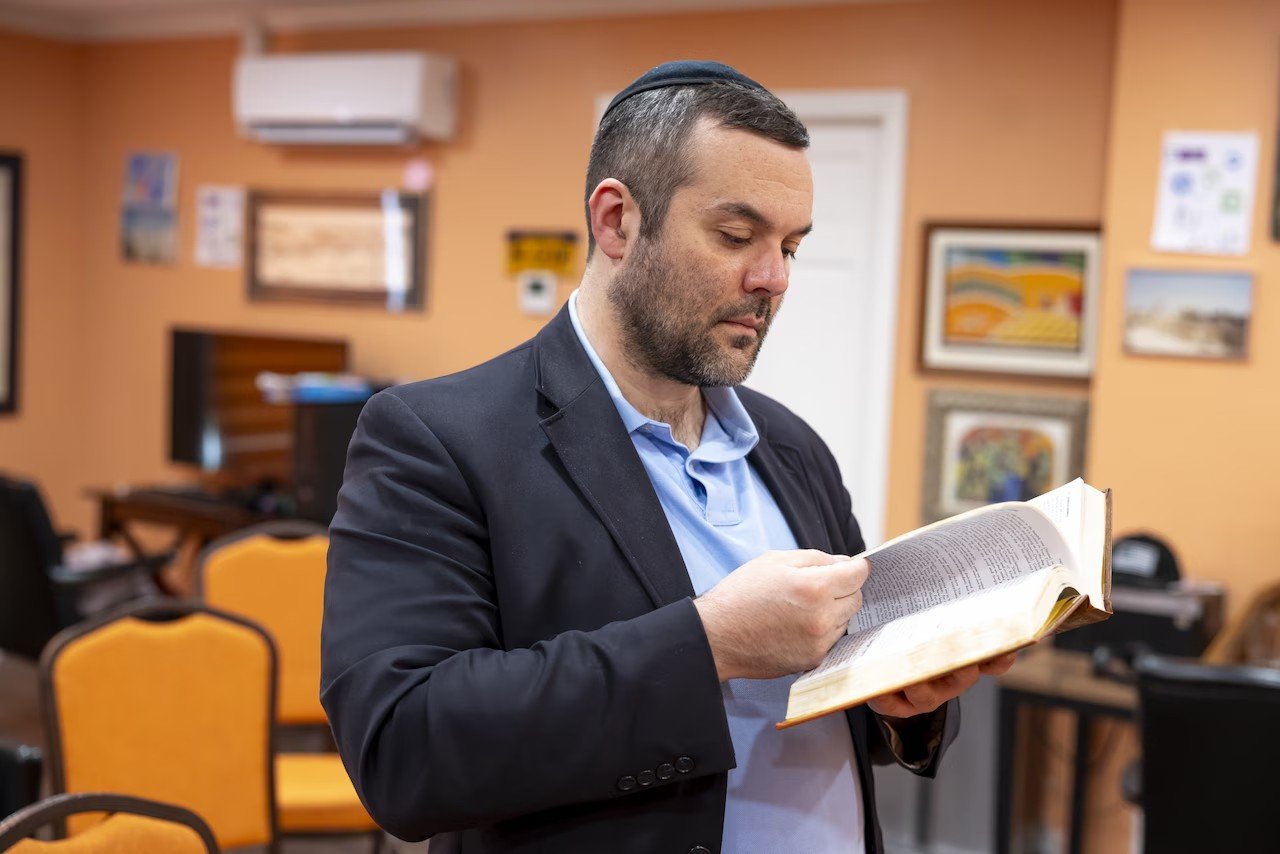
Cleveland, OH— A local Orthodox Jewish resident’s fight to host daily prayer services in his home has reached the doorstep of the nation’s highest court, raising broader questions about religious liberty, zoning rules, and government overreach.
“This is not a Jewish issue alone. It’s a Christian issue. It’s a Muslim issue. It’s a Buddhist issue. It’s a Seventh-day Adventist issue. It’s an American issue.”
University Heights resident Daniel Grand doesn’t mince words when it comes to how he feels about the gravity of his lawsuit against University Heights, former Mayor Michael Dylan Brennan and other former and current city employees after being ordered by officials to stop hosting prayer services in his home without a permit.
Daniel Grand, who moved to University Heights in 2017, sought to gather a minyan — the traditional quorum of 10 Jewish men required for certain prayers — three times daily at his residence on Miramar Boulevard. As an observant Jew, he preferred home services over walking to a synagogue multiple times a day. In January 2021, after inviting neighbors, city officials, including then-Mayor Michael Dylan Brennan, informed him that a special-use permit under local zoning code was required.
Grand initially applied but withdrew after learning the permit could reclassify his home as a commercial “place of religious assembly,” potentially barring him from living there. He alleges the city issued a cease-and-desist order, surveilled his property, and treated his small gatherings differently from secular events like parties or holiday meals. Grand filed a federal lawsuit in September 2022, claiming First Amendment violations and selective enforcement.
Lower courts sided with the city. U.S. District Judge Bridget Meehan Brennan ruled against Grand in September 2024, and the Ohio 6th District Court of Appeals upheld the decision in November 2025. Grand and his attorneys argue the permitting process should not apply to private home prayer and that he should not have to exhaust it before challenging the restriction.
Alliance Defending Freedom, partnering with Orrick, Herrington & Sutcliffe LLP, filed a petition for certiorari. “No American should need a government permit to pray with friends in his own home,” said Josh Rosenkranz of Orrick.
Multiple organizations, including the Orthodox Union, National Jewish Advocacy Center, U.S. Conference of Catholic Bishops, and Seventh-day Adventists, filed amicus briefs supporting Grand, emphasizing the issue transcends one faith.
Grand has stressed the personal toll: family strain, legal costs, and ongoing restrictions under the prior administration. Current Mayor Michele Weiss, the first female Orthodox Jewish mayor in the U.S., noted the city now clarifies small minyans do not require permits, while remaining sensitive to community needs.
A decision on whether the Supreme Court will hear the case is expected in coming months. Supporters see it as a pivotal test of whether zoning power can burden core religious exercise in the home.
Observations
We are glad that the SDA church has come out in support of Daniel Grand.
We support the right of individuals to have prayer meetings or spiritul gatherings in their own homes, without needing permission of local authorities to do so.
People who believe otherwise, may be happier in red China.
***
“The churches of Asia greet you. Aquila and Priscilla greet you heartily in the Lord, with the church that is in their house. All the brethren greet you” (1 Corinthians 16:19).
